Leadership and AI: Balancing Technology with Human Decision Making
Introduction
The age of artificial intelligence is not limited to tomorrow but is already here in today’s business world, where we can find AI applications in team management, decision-making processes at the executive level, and elsewhere. But along with the growing capabilities of AI, there is one crucial question that all leaders face: How to adopt such technology while keeping their human touch?
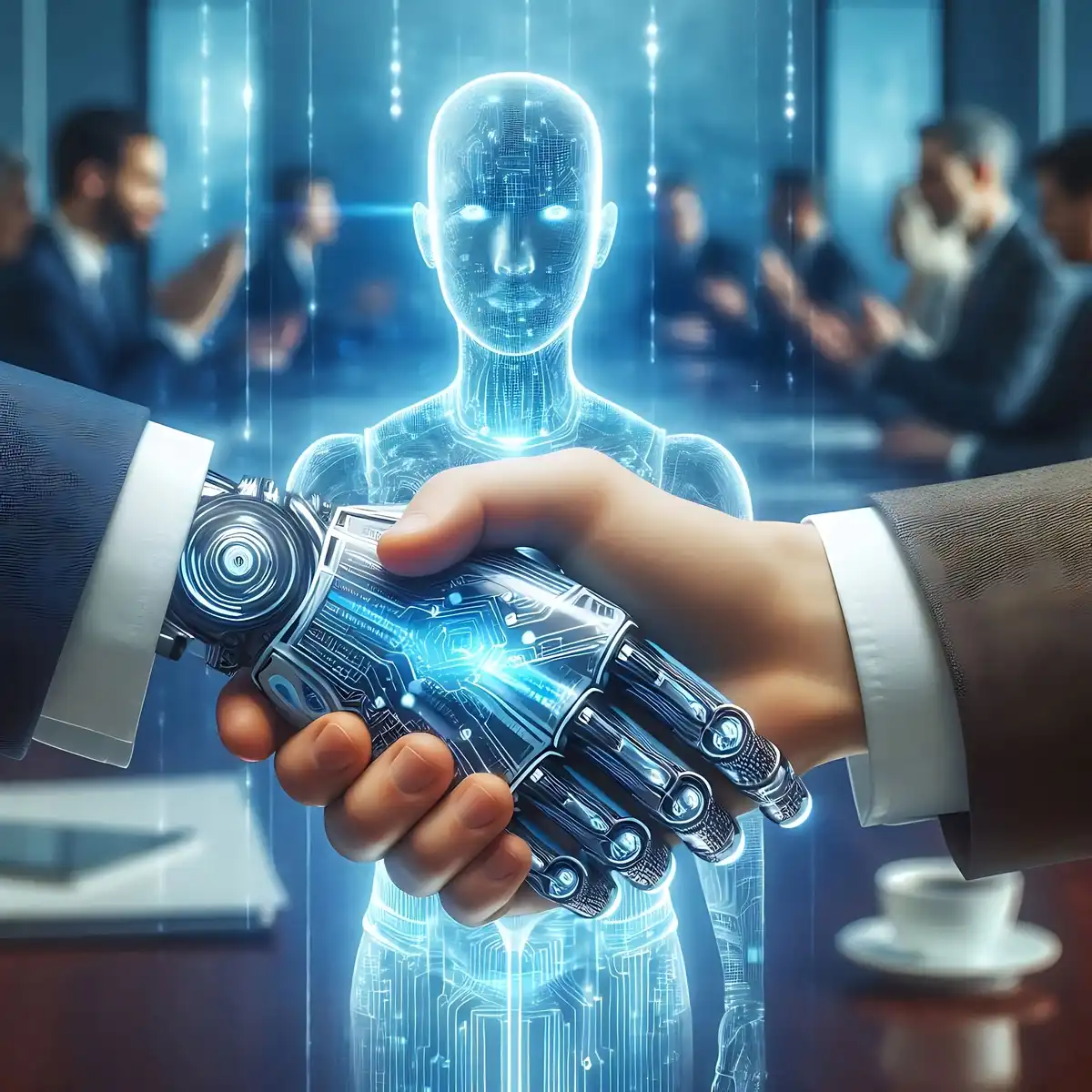
The solution does not involve making a choice between technology and instinct. Rather, the solution is in knowing how to leverage them both. Leaders’ AI is not about removing the need for intuition by applying artificial intelligence. Instead, it’s about helping you become better at thinking, deciding, and leading your team in general. For individuals interested in developing both qualities at once, the AI for leaders is the path forward.
AI Can Inform, But It Cannot Lead
The strength of AI technology lies in the ability to work with huge chunks of data in seconds, identify any patterns, make predictions, and draw useful conclusions much quicker than any human staff. However, leadership does not always depend on data processing alone but also on human intuition and insight.
Consider a scenario where an AI tool advises a company to withdraw a certain product from sale due to decreasing interest from customer behavior data. A leader, depending on such information alone, would fail to understand the brand loyalty that exists within a particular group of customers towards that product. Such an insight demands a human touch. AI will give you the situation; a leader alone understands its implications and the course of action to take.
Why Human Judgment Still Matters
Even in a world driven by data, the most respected leaders are those who bring empathy, ethics, and emotional awareness to the table. These are qualities that no machine can replicate.
- The leader realizes that one of his usually active employees is not participating in any of the meetings. While the AI technology may have picked up on the employee’s reduced productivity levels, only a leader can sit down and engage him by asking the relevant questions and offering encouragement.
- In the event of organizational restructuring, the AI can determine the most cost-effective solution. However, the leader has to factor in the implications the choice will have on the people’s lives.
- In times of crisis, it is not the dashboard that gives assurance but the leaders.
These moments are where leadership is truly defined, and they require the kind of judgment that technology simply cannot provide.
The Real Challenge: Knowing When to Listen to AI and When to Trust Yourself
Finding the balance is one of the most important challenges that leaders have to confront in the present times. At what point should they base their decision making on evidence-based data and at what point should they trust their experience and intuition?
Let us consider the case of the recruiting manager who uses artificial intelligence for screening the best suited applicants. While the applicant screened by the AI is technically a good match, the hiring manager senses a lack of fit based on his or her intuitive sense.
AI for leaders is not about blindly following technology. It is about developing the wisdom to know when data should guide your decisions and when human insight should take the lead.
Learning to Lead Alongside AI
The good news is that this balance can be learned. Professionals who invest in understanding AI from a leadership perspective find themselves making better, more confident decisions.
- They learn to ask the right questions instead of accepting AI outputs at face value.
- They understand how to interpret data within the context of their business and culture.
- They become comfortable using AI tools without feeling threatened or overwhelmed by them.
- They build trust within their teams by being transparent about how technology is used in decision making.
An AI leadership course is specifically aimed at helping professionals gain exactly these skills. No previous technological expertise is required. The program rather emphasizes acquiring practical knowledge and awareness, along with leading teams through the process of technological transformation confidently.
Creating a Culture Where Technology and Humanity Coexist
Leaders define the attitude that is going to be adopted by the organization towards the use of technology. If a leader fears AI technology, his team will adopt that approach too. However, if the leader has an inquisitive approach to AI, this will encourage a culture of exploration.
The manager, having undergone structured training, began conducting informal meetings where the group discussed ways in which AI could make their job easier. Rather than force an innovation upon the group, he asked for their thoughts and input. The outcome was a group that was engaged, educated, and enthusiastic rather than fearful.
Conclusion
The future of leadership is neither an issue of either technology or humanity; rather, it’s all about integrating the two for making stronger decisions, building more confidence within teams, and making organizations stronger. There is no doubt that there are some amazing benefits of utilizing AI for decision-making and analyzing situations; however, it cannot replace leadership qualities like empathy and ethics.
Leadership with AI is the ability to collaborate with intelligent machines while remaining rooted in the uniquely human attributes that build trust and instill transformation. For the professionals who are interested in achieving this balance consciously, a course in AI leadership is the perfect starting point. The successful leaders of today’s world won’t be the ones with the most technical knowledge. They will be the ones who are skilled at integrating technology with their intuitive decision-making skills.