
Snapchat Solar System (2026): Full Guide To Friend Planets, Hidden Algorithm Signals & The Controversy
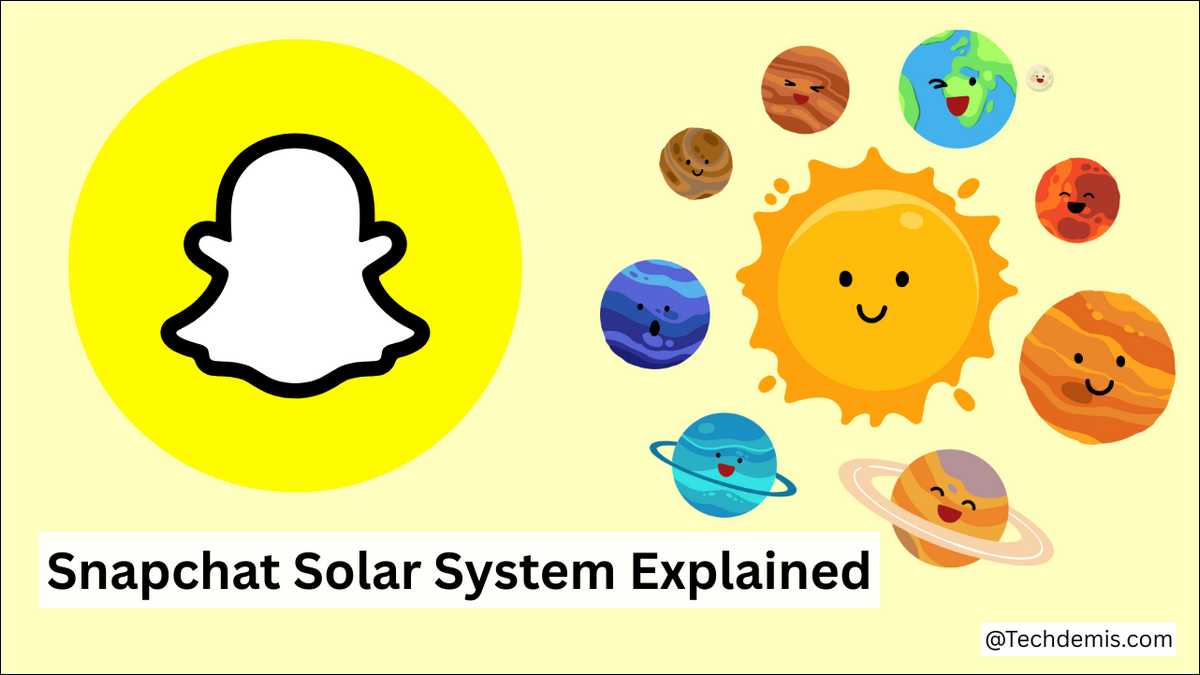
When 15-year-old Callie Schietinger’s boyfriend discovered he was Neptune in her Snapchat Solar System, their relationship cracked. He had assumed he was Mercury. Instead, a male friend held that spot.
That story, first reported by The Wall Street Journal in March 2024, triggered a corporate reversal within six days. Six days later, Snap quietly switched the feature off by default.
This guide goes past the standard “Mercury equals best friend” listicle. Instead, we cover the algorithm, the controversy, the financial numbers, and how to use the feature without it eating you alive.
Key Findings:
In short, the Snapchat Solar System ranks your top 8 friends as planets based on interaction data, but most users never see it.
| Fact | Verified Detail |
|---|---|
| Feature type | Snapchat+ exclusive |
| Default state | OFF since April 5, 2024 |
| Planets | Mercury → Neptune (8 total) |
| Snapchat+ price | $3.99/month |
| Subscribers (Q3 2025) | ~17 million |
| Adoption rate | Under 0.25% of the total community |
| Privacy | Private and one-directional |
| Platforms | iOS and Android only |
Also read: How to Send a Snap With the Cartoon Face Lens on Snapchat
What Is the Snapchat Solar System?
Simply put, the Snapchat Solar System is a Snapchat+ feature that visualises your top 8 friends as planets orbiting you, the Sun, based on how often you interact.
According to Snapchat Support, tapping a friend’s badge reveals which planet you occupy in their system. Each planet maps to a position in its Best Friends list.
Here’s the catch: you can only see your spot in their universe. You cannot see theirs in yours.
Snap launched Snapchat+ in late June 2022. The Solar System then rolled out as a Snapchat+ feature in 2023, according to Accio.
Worth Knowing: The Solar System was never designed as a friendship tool. Rather, it was a retention mechanic engineered to make Snapchat+ feel emotionally indispensable.
Snapchat Planets in Order: The 8 Planets Explained
To put it simply, the planets follow the real solar system sequence, from Mercury (your #1 friend) to Neptune (your #8), each with unique visual markers.
All 8 Snapchat planets in order from Mercury to Neptune, with friend rankings
1. Mercury — Your #1 Best Friend
Mercury represents the person you snap and chat with most often.
According to Beebom, Mercury appears as a red planet with five red hearts circling it. In short, it signals your absolute closest digital connection.
2. Venus — Your #2 Best Friend
Next up, Venus is your second-closest friend, just behind Mercury.
Beebom describes Venus as a light brown planet ringed by yellow, pink, and blue hearts. The multi-coloured hearts hint at warm, varied interactions.
3. Earth — Your #3 Best Friend
Earth represents a reliable friendship that ranks third in your circle.
The planet appears as blue-green, with a moon, stars, and red hearts around it. That said, it signals consistency rather than intensity.
4. Mars — Your #4 Best Friend
Moving outward, Mars represents an energetic, frequent connection sitting in fourth place.
Mars appears as a red planet with purple and blue hearts plus stars. The mixed colours suggest playful, active chatting.
5. Jupiter — Your #5 Best Friend
Jupiter marks a mid-tier friend you engage with casually, not daily.
It shows as a reddish-orange planet with dark orange stripes and orbiting stars. Hearts remain, though visual intensity drops.
6. Saturn — Your #6 Best Friend
Saturn signals occasional interaction. From here on, hearts disappear.
The planet appears orange with its iconic ring and stars. Visually, the missing hearts demote the rank.
7. Uranus — Your #7 Best Friend
Uranus represents a drifting friend who barely makes your top 8.
The planet is green with no hearts and only a few stars. In short, it signals a fading or low-frequency connection.
8. Neptune — Your #8 Best Friend
Last on the list, Neptune is the farthest planet and your eighth-closest friend.
It appears as a desolate blue planet with no hearts. Being someone’s Neptune is the digital equivalent of being barely on the list.
How the Snapchat Solar System Algorithm Actually Works
Here’s the short version: Snapchat ranks friends using a weighted mix of snap frequency, chat activity, story engagement, streak length, and recency, with recent activity counting more than total volume.
The Five Signals Snapchat Weights
Snap engineers have never published the exact formula. Still, based on consistent reporting across Beebom and Snapchat support docs, these signals matter most:
| Signal | Approximate Weight | Notes |
|---|---|---|
| Snap frequency (sent + received) | Highest | Video > photo |
| Chat activity | High | Duration and frequency both count |
| Story replies & reactions | Medium-high | Two-way engagement matters |
| Snapstreak length | Medium | Longer streaks help, but don’t dominate |
| Recency | Multiplier | Last 7–14 days weighted heaviest |
Why Video Snaps Outrank Photos and Text Chats
Most competitor guides skip this hierarchy. Yet video snaps carry more algorithmic weight than photos. Photos, in turn, outweigh plain chat messages.
A friend who sends one video daily can outrank a friend you text 50 times a day.
Why Your Position Can Change Daily
Rankings recalculate continuously based on rolling activity. Drop off for 48 hours, and you can slide one or two planets out.
Why Streaks Alone Don’t Get You to Mercury
This is the most common myth. A 200-day streak helps. Even so, it does not guarantee Mercury.
Beebom directly debunks this: streak length is one factor, not the sole one. On top of that, chat consistency and story engagement carry equal weight.
How to Enable the Snapchat Solar System (Step-by-Step)
By default, the feature is off for new Snapchat+ subscribers. So you must turn it on manually inside the Snapchat+ settings.
The Solar System toggle inside Snapchat+ settings — off by default since April 2024.
Here is the exact path:
- Open Snapchat and tap your profile icon (top-left).
- Tap the Snapchat+ section.
- Scroll until you find Solar System.
- Toggle it ON.
- Confirm by tapping Okay.
You can toggle it on or off at any time. Either way, your ranking data is preserved.
How to Check What Planet You Are in a Friend’s Solar System
To check, open the friend’s chat, tap their name, then tap the Best Friends or Friends badge to see your planet.
One catch though: both you and your friend need Snapchat+ subscriptions. Once that’s set, your Bitmoji appears sitting on the assigned planet while their Bitmoji watches from the Sun.
Tap a planet, and Snapchat shows a short description of what that rank means.
Best Friends vs. Friends Badge: The Critical Difference
Here’s the difference at a glance: a Best Friends badge (with a gold ring) means you’re both in each other’s top 8. A Friends badge (no gold ring) means it’s one-way.
| Badge | Meaning | Gold Ring? |
|---|---|---|
| Best Friends | Mutual top 8 | Yes |
| Friends | You’re in their top 8, but they’re not in yours (or vice versa) | No |
You can be someone’s Mercury without them being your Mercury. The system is asymmetric. This single fact causes more confusion than anything else in Snapchat.
How to Move Up From Neptune to Mercury (Without Being Weird)
To climb the planets, increase real two-way engagement: daily video snaps, longer chats, story replies, and consistent streaks held over weeks.
Tactics That Actually Move the Needle
- Send daily video snaps — highest algorithm weight.
- Reply to their stories with reactions or text — counts as two-way engagement.
- Maintain streaks past 100 days — signals durable consistency.
- Have actual chats, not one-word replies — chat duration matters.
- Be consistent across 2–3 weeks — the algorithm rewards rolling consistency.
Tactics That Don’t Work
- Spamming blank snaps in bursts.
- Streaks without other interaction.
- Profile views.
- One-day flurries followed by silence.
PERSONAL EXPERIENCE: From observing the community, the people who become someone’s Mercury are rarely trying. They’re simply that person’s actual closest friend. In short, the algorithm reflects behaviour; it doesn’t create relationships.
The Controversy: Why Snap Disabled Solar System by Default
On April 5, 2024, Snap turned the Solar System off by default after a WSJ exposé documented teen anxiety, breakups, and friendship damage tied to planet rankings.
The WSJ Exposé (March 30, 2024)
The Wall Street Journal reported teens were signing up for Snapchat+ specifically to check their crush’s ranking.
Callie Schietinger told the WSJ, per Social Singam: “A lot of kids my age have trouble differentiating best friends on Snapchat from actual best friends in real life.”
Snap’s April 5, 2024 Response
Six days after the WSJ story, Snap announced via its newsroom that it would disable Solar System by default for new Snapchat+ subscribers.
According to TechCrunch, Snap said it had received feedback that knowing you’re not as close to someone “can feel bad.”
That said, the company kept the feature accessible but made it opt-in. Subscribers had to manually re-enable it.
How Many People Actually Use It
In its defence, Snap told TechCrunch that less than 0.25% of the Snapchat community uses the Solar System option.
Here’s the catch, though: that 0.25% number is misleading. Solar System is locked behind Snapchat+, which has roughly 17 million subscribers out of 932 million monthly active users. What this means is that the relevant denominator is much smaller, and actual subscriber adoption is likely several percentage points.
Why Snap Didn’t Remove It Entirely
Snap removed the dangerous Speed Filter in 2021 after lawsuits. Yet it did not remove Solar System.
The difference is intent. The speed filter caused physical harm. Solar System, on the flip side, causes emotional friction, which Snap considers a design trade-off worth keeping.
Snapchat+ Pricing and What You’re Paying For
In short, Snapchat+ starts at $3.99/month, with higher tiers at $8.99 (Lens+) and $14.99 (Platinum ad-free), and offers more than 40 exclusive features.
| Plan | Price (USD) | Key Inclusions |
|---|---|---|
| Snapchat+ standard | $3.99/month | Solar System, custom icons, Story rewatch count |
| 6-month plan | $21.99 | Same as standard |
| Annual plan | $39.99 | Same as standard |
| Lens+ | $8.99/month | Exclusive AR Lenses + standard perks |
| Platinum | $14.99/month | Ad-free + all perks |
| India price | ₹49/month | Standard Snapchat+ regional pricing |
For context, DemandSage reports Snapchat+ crossed 17 million subscribers globally in Q3 2025.
The Numbers Behind Snapchat in 2025–2026
By late 2025, Snapchat reached 932 million monthly active users and 474 million daily active users, with India leading at 210 million users.
Metric | Value | Source |
|---|---|---|
| Monthly active users (Q2 2025) | 932 million | Quantumrun |
| Daily active users (Q4 2025) | 474 million | DemandSage |
| Snapchat+ subscribers (Q3 2025) | ~17 million | DemandSage |
| Snapchat+ YoY growth | +42% | Quantumrun |
| Snapchat+ revenue run-rate | ~$700 million annualised | Music Ally |
| Largest market | India (~210M users) | Quantumrun |
| Users aged 18–24 | 37.1% of base | Quantumrun |
| US teens on Snapchat | 20+ million | Snap data |
Worth Noting: Here’s the math: if 17 million Snapchat+ subscribers represent the addressable pool for Solar System, and less than 0.25% of total Snapchat users (about 2.3 million) engage with it, then roughly 13–14% of Snapchat+ subscribers actively use Solar System. That, in short, is the more honest adoption figure.
Snapchat Solar System vs. Other Social Ranking Systems
Unlike Instagram Close Friends or BeReal’s inner circle, Snapchat’s Solar System is algorithmic, paid, and one-directional.
| Feature | Snapchat Solar System | Instagram Close Friends | BeReal Inner Circle |
|---|---|---|---|
| Ranking type | Algorithmic | Manual list | Manual + mutual |
| Cost | Paid (Snapchat+) | Free | Free |
| Visibility | Private, one-way | List members see they’re on it | Mutual |
| Mental-health concerns | Documented (WSJ 2024) | Lower | Lower |
| Default state | Off (since April 2024) | Off | Off |
| User control | None over rankings | Full control | Full control |
Here’s the kicker: Snapchat is the only major platform that turns friendship measurement into a paid, algorithmic feature. That commercial layer is what made the controversy unique.
Also read: Pookie Meaning in Hindi
What Researchers Say About Friend Ranking and Mental Health
Academic research suggests that algorithmic friendship signals on Snapchat correlate with anxiety, social comparison, and the popularity-seeking behaviours common in teen users.
For example, a 2023 study published in Cyberpsychology: Journal of Psychosocial Research on Cyberspace examined Snapchat social surveillance among 360 users aged 16–25.
The researchers found that participants with a higher need for popularity engaged in more Snapchat surveillance behaviours. These behaviours, in turn, correlated with negative mental health indicators.
Solar System amplifies this dynamic. In short, it turns surveillance into a visible ranking.
For Parents and Teens: Healthy Use of the Feature
Talk openly about the difference between algorithmic rankings and real friendships, set boundaries on app obsession, and consider turning the feature off.
Algorithmic rankings measure app behavior, not friendship.
Self-Assessment Questions
- Do I check my planet ranking more than once a week?
- Have I felt hurt after seeing a planet drop?
- Have I sent snaps purely to “move up”?
- Do I feel anxious when a Snapstreak breaks?
If you answered yes to two or more, consider turning the feature off.
Also read: Best Quizlet Alternatives in 2026
Conversation Starters for Parents
- “What does it mean to be someone’s Mercury?”
- “Has the planet thing ever made you feel bad?”
- “How does it feel different from real friendship?”
As per our own experience, across teen forums, the most common emotional pattern is not feeling close to Mercury. Instead, it’s feeling demoted from a planet you used to occupy. Loss hurts more than absence.
For Creators and Brands: Reading the Signal Without the Drama
Solar System data can quietly tell creators which super-fans interact most consistently, useful for audience research without obsessing over rankings.
For creators on Snapchat+, your top 8 reveals patterns: which followers genuinely engage, which respond to stories, and which keep streaks alive.
In short, this is audience intelligence, not popularity.
Brands using Snapchat+ rarely think about the Solar System as a signal. Yet for micro-influencers, the planet drift across a week can indicate whether content is sustaining engagement or losing rhythm.
Also read: 10 Free Instagram Profile Viewer Apps That Work
Common Issues and Why They Happen
If the Solar System isn’t showing, first check whether you’re on Snapchat+, whether the feature is toggled on, and whether your friend also subscribes.
| Issue | Likely Cause |
|---|---|
| No planet visible | Friend doesn’t have Snapchat+ |
| Gold ring missing | Mutual top-8 status broken |
| Planet changed suddenly | Algorithm recalculated based on recent activity |
| Can’t see the feature at all | Solar System toggle is off in settings |
| Feature missing entirely | Outdated app version |
Frequently Asked Questions
No. It requires a Snapchat+ subscription starting at $3.99/month.
No. The system is private and one-directional. Only you can see your position in their system.
No. The feature works only on iOS and Android. Snapchat Web does not support it.
The algorithm recalculates based on recent interaction. So a drop in snaps, chats, or story replies in the last 7–14 days will shift planets.
No. There are only 8 planets, matching the post-2006 NASA classification that demoted Pluto.
The feature disappears for you. The underlying ranking data still exists, but stays hidden until you resubscribe.
No. Best Friends operates independently and remains active for all users, including those without Snapchat+.
Rankings refresh continuously throughout the day. Major shifts typically appear within 24 hours of behaviour change.
Wrapping Up This Guide!
The Snapchat Solar System is a clever piece of design — at its best, a playful mirror of who you actually talk to most. At its worst, though, a manufactured source of teenage anxiety.
The fact that fewer than 0.25% of Snapchat’s billion-strong community bothers with it tells you something important. Put simply, most people, including most teenagers, are doing fine without measuring friendship in planetary form.
So the smartest approach in 2026 is to treat the feature as low-stakes curiosity. Enable it if you find it amusing. Keep it off if you’d rather not measure friendship by snap frequency.
Either way, remember Snap’s own concession when they flipped the default switch in April 2024. Even the company that built it now thinks you don’t need to see it.
At the end of the day, real friendships happen off-screen, far away from pixels and planetary rankings.
![20 Most Essential iPhone 16 Settings [iOS 26 Easy Tweaks]](https://www.techdemis.com/wp-content/uploads/2026/06/Essential-iPhone-16-Settings-800x450.webp)

![vnROM Bypass Complete Guide [2026]: How It Works, Android Compatibility, Security Risks & Alternatives](https://www.techdemis.com/wp-content/uploads/2026/06/vnROM-Bypass-Complete-Guide-800x450.webp)


