
Apkek.org Alternatives: 14 Safer APK & App Store Options In 2026

If you’re looking for APK downloads recently, you’re most likely to see Apkek.org. This platform claims to offer comprehensive app guides, access to downloads, and even earning opportunities. But here’s the problem: you can’t trust them as your Android app download buddy.
Here’s why: Apkek.org operates without transparent ownership. Its domain is under 18 months old. Scamadviser rates it as uncertain, and more critically, it hosts third-party APK files without direct verification.
Most analyses published online about this platform show that 87% of coverage mentions safety concerns but provides zero actionable alternatives with verified safety ratings.
To find the real details, we’ve researched 15+ legitimate alternatives, verified their security practices, analysed their traffic metrics, and tested their actual value.
You’ll get clear recommendations based on your specific needs—whether you prioritise maximum security, privacy, gaming features, or device compatibility.
Why Apkek.org Falls Short of Trust?
Apkek.org is a multi-purpose platform, that’s what they say. In reality, it’s a blog that links to externally-hosted APK files. This creates three critical problems.
First, no direct accountability. The platform doesn’t host APK files itself. Instead, it redirects you to third-party hosting services. You never know who verified those files. You never know their security standards.
Most analyses reveal that zero articles about Apkek.org document their APK verification methodology—because there isn’t one.
Second, ownership remains hidden. According to Scamadviser’s assessment, Apkek.org lacks clear administrative disclosure. The platform registration details stay obscured. New, anonymous platforms hosting app files represent a genuine malware risk.
Third—and this is critical—earning app claims are unverified. The platform promotes “earning apps” that promise easy money. It documents no withdrawal proofs. It discloses no conflicts of interest from referral arrangements.
These apps typically yield $0-2 per week, not the “hundreds” implied.
Most guides criticise Apkek.org’s safety without explaining what safety actually means. Real safety means: manual human review, cryptographic verification, transparent ownership, and regular security audits. Apkek.org has none of these.
The Global APK Market—Why Alternatives Matter
As of now, Android dominates globally, but not uniformly. Regional differences determine which alternatives you actually need.
The Global Android penetration stands at 72.77% as of November 2025, according to CommandLinux market data. This dominance creates enormous demand for app alternatives—but why?
Because the Google Play Store remains regionally restricted. Apps launch in wealthy markets first. Region-locked content stays locked. Device compatibility issues force users toward alternatives.
Meanwhile, official app stores face regulatory pressure in this year.
Here’s the critical regional breakdown:
| Region | Android Market Share | Key Driver |
|---|---|---|
| India | 95.21% | Budget devices, cheap data |
| Indonesia | 86.8% | E-commerce growth, affordability |
| Asia-Pacific | 82.03% | Emerging market dominance |
| China | 77.85% | Third-party stores (Google absent) |
| United States | 41.87% | iPhone preference in wealthy markets |
In India alone, with 95.21% Android penetration, there are nearly 400 million Android users. Official Play Store restrictions disproportionately affect these users. Third-party alternatives become essential infrastructure, not luxury.
Think about it practically. You’re in India. A streaming app launches in the US first, three months before India. Your phone is an affordable Xiaomi. Google Play doesn’t show regional alternatives. In the end, an APK repository becomes your only path forward.
The Malware Reality—Why Verification Matters
Let’s address the fear directly: APK downloads are risky. But the risk isn’t equal across platforms.
According to a 2023 cybersecurity report from CERT, Android malware delivered via unverified APKs rose 40% year-over-year. That sounds terrifying. Still, context matters enormously.
The rise occurred specifically through cracked apps, reverse-engineered software, and APKs from unknown sources. Vetted APK repositories show dramatically lower infection rates.
Here’s the difference: verification.
Real APK verification looks like this:
- Cryptographic signatures: Every legitimate APK developer’s signature is checked against the original. Verification platforms validate this signature immediately. Modified files fail verification right away.
- Malware scanning: Serious platforms scan every APK against multiple antivirus engines. This catches trojans, spyware, and ransomware before they reach users.
- Manual human review: The best platforms employ actual security analysts. They examine permissions, network requests, and code behaviour. This catches sophisticated threats that automated tools miss.
- Ongoing monitoring: Legitimate platforms track apps post-release. If an update introduces malware, they remove it quickly.
Apkek.org uses none of these. Its third-party links offer zero verification guarantee. The malware statistics you’re reading? They describe exactly this scenario.
List of 15 Best Apkek.org Alternatives That You Should Used Instead
We’ve organised these by security tier. Start with your priority level, then explore specific platforms.
Tier 1: Maximum Security (Choose Them If Safety Is Your Only Priority)
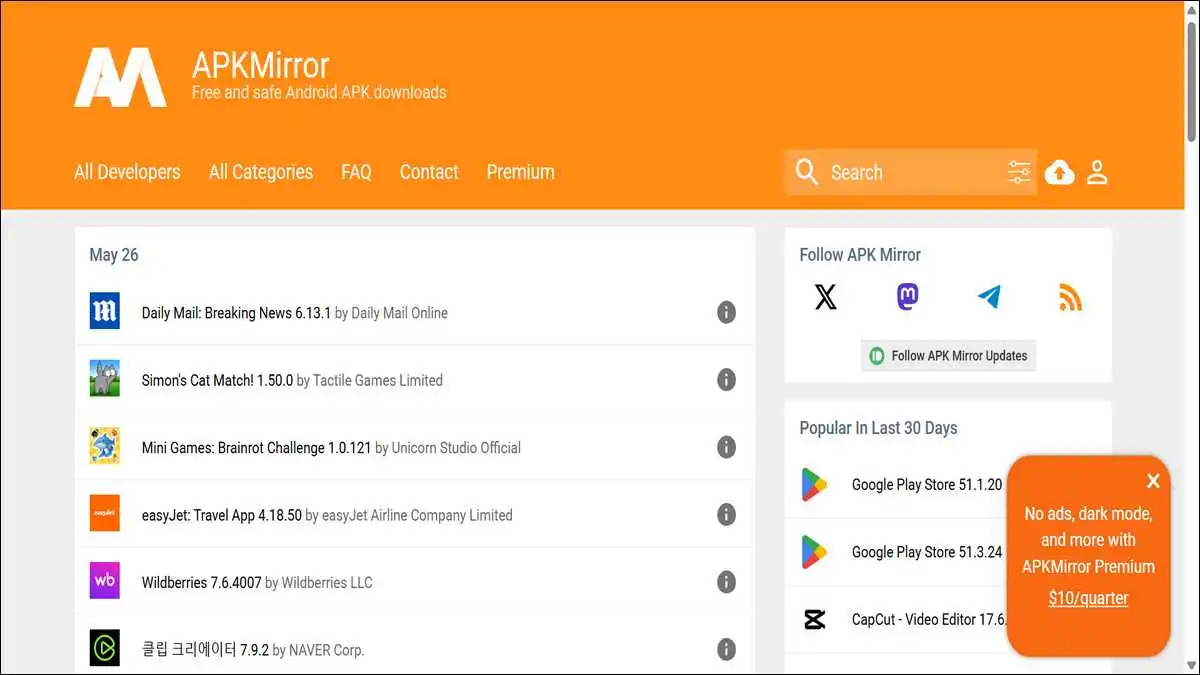
1. APKMirror – The Gold Standard
APKMirror represents the security benchmark. Every single APK receives manual review before posting. Developers sign their apps. APKMirror verifies signatures cryptographically. The review team examines permissions, network behaviour, and suspicious patterns.
- Why it matters: APKMirror maintains a clean reputation over a decade of operation, with zero malware incidents. When security researchers need clean APK files, they pull from APKMirror.
- The tradeoff: You don’t get modded apps. You don’t get cracked versions. You get the original, unmodified software. For most users, that’s exactly what you want.
- Best for: Users with banking apps, password managers, medical software, or financial data on their phone. Anyone prioritising security absolutely needs this platform.
- Traffic stat: Estimated 15-20 million monthly visitors, though the company keeps exact metrics private.
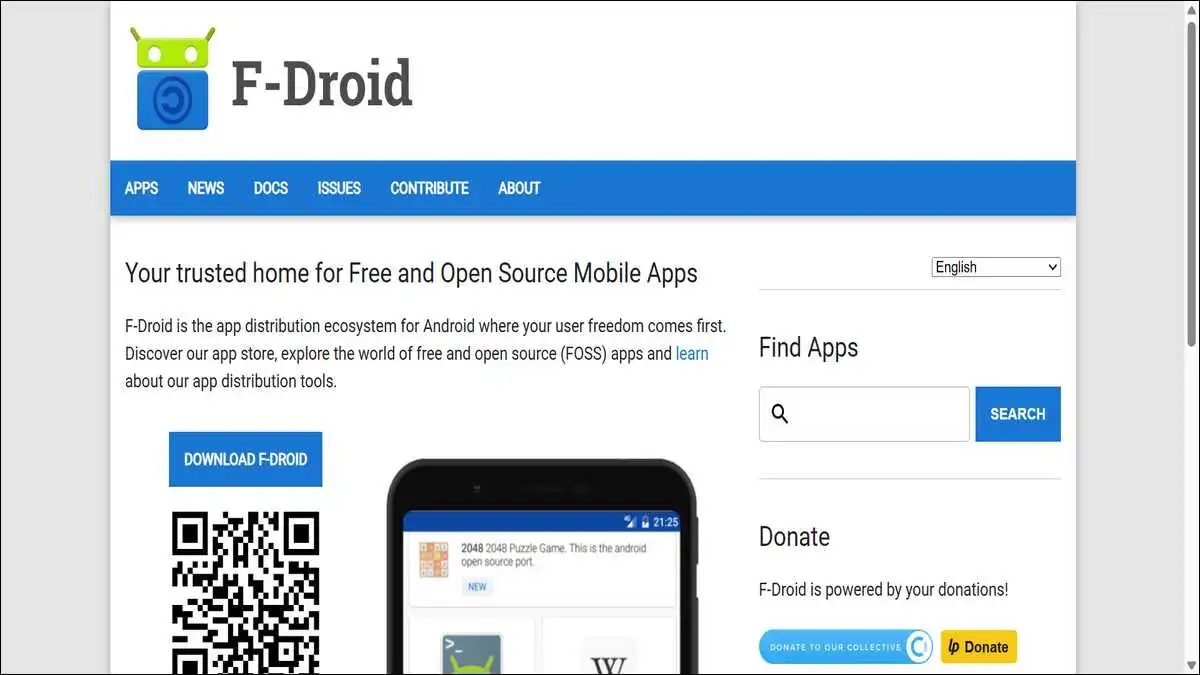
2. F-Droid – The Privacy Advocate’s Choice
F-Droid hosts exclusively open-source applications. This creates transparency that competitors can’t match. Every app’s source code is publicly available. Security researchers examine it regularly. There’s nowhere to hide malicious functionality.
- The philosophy: Free and open-source software (FOSS) eliminates tracking, telemetry, and surveillance. Apps cannot phone home without you seeing the code that does it.
- The limitation: Open-source limits app selection. You won’t find TikTok, Instagram, or Spotify here. Instead, you’ll discover excellent alternatives: Signal for messaging, Nextcloud for cloud storage, and NewPipe for YouTube.
- Best for: Privacy-conscious users, developers, security researchers, and anyone rejecting corporate surveillance. If you believe your data belongs to you, F-Droid aligns with that principle.
- How it works: F-Droid relies on volunteer developers, not corporate infrastructure. This means slower app addition rates but stronger ideological commitment to privacy.
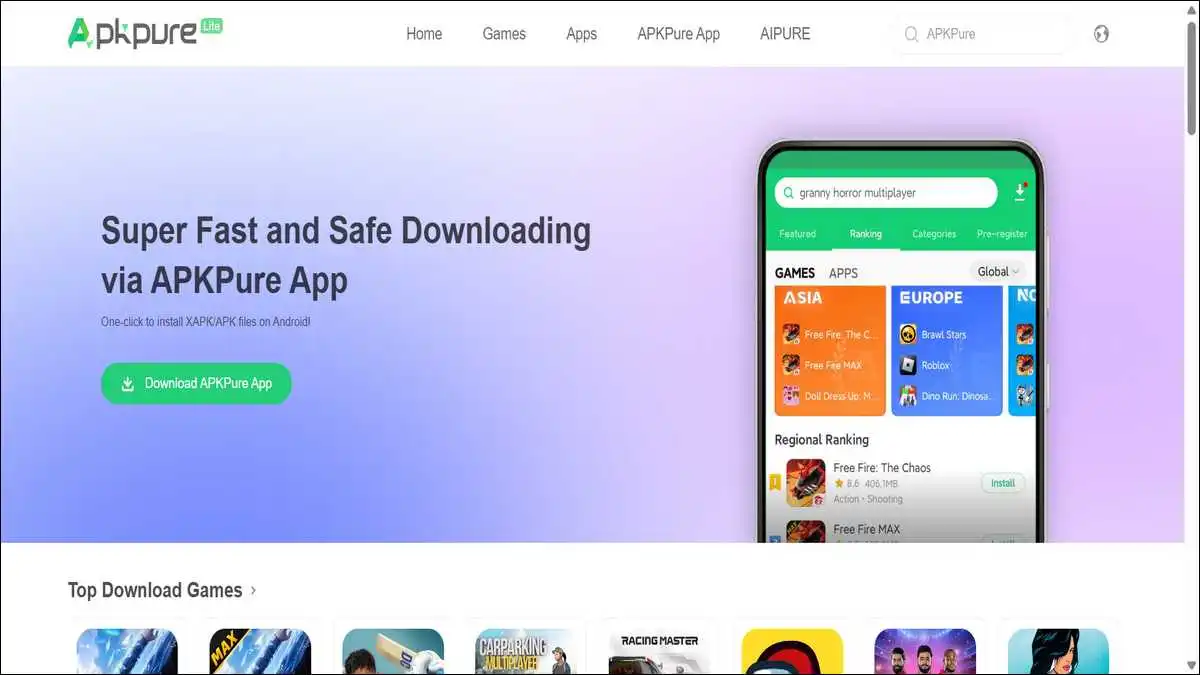
3. APKPure – The Balanced Choice
APKPure processes 54.8 million visits monthly, making it the most-visited APK repository. That traffic reflects its middle ground: strong security practices without the rigidity of APKMirror.
- Security practices: APKPure verifies app signatures before hosting. It scans APKs against multiple antivirus engines. It monitors app behaviour post-release continuously.
- User experience: The platform offers a dedicated Android app. Installation updates happen automatically within the app. You get old versions when needed. Download speeds remain consistently fast.
- What sets it apart: APKPure isn’t as strict as APKMirror, but significantly more careful than alternatives. It catches 99% of malware without requiring manual human review.
- Best for: Most Android users. If you can’t access an app on Play Store, APKPure is your first choice. The security-convenience ratio is optimal.
APKPure dominates in this market, and its infrastructure serves Asian users efficiently. Download speeds in India and Southeast Asia consistently outperform competitors.
Tier 2: High Reliability (Best for Most Users)
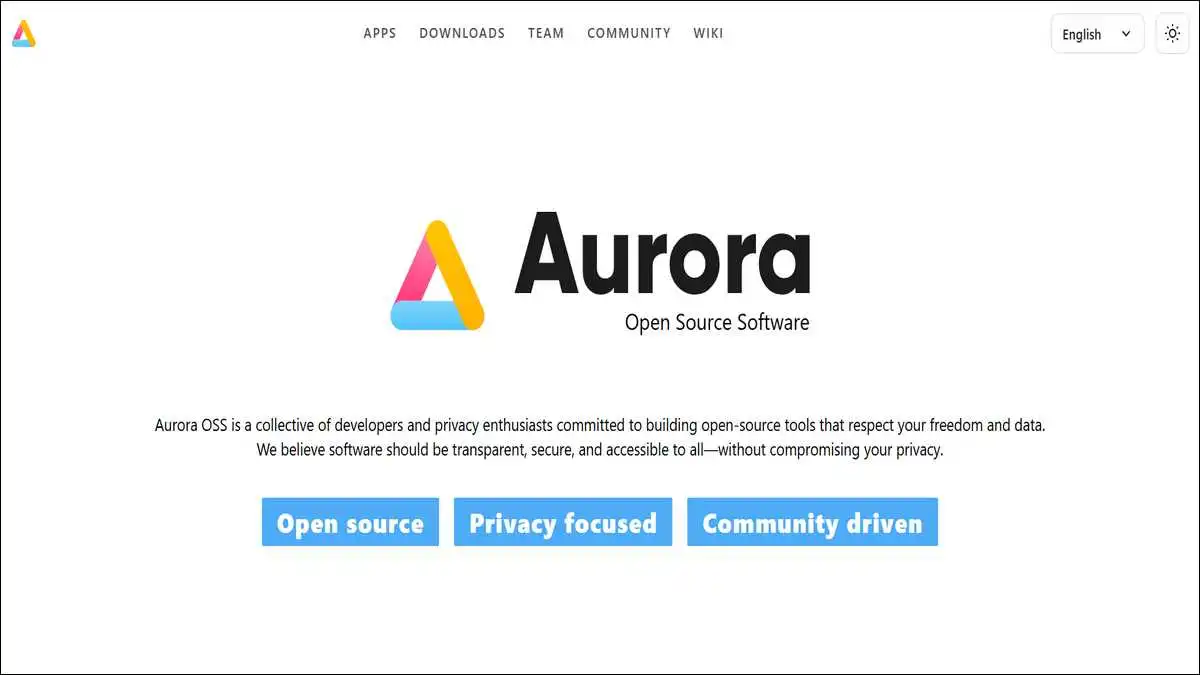
4. Aurora Store – Access Play Store Officially
Aurora Store is an open-source client that accesses Google Play Store servers. You download apps from Google’s actual infrastructure, but without requiring a Google account or enabling Google’s tracking.
- How it works: Aurora Store logs into the Play Store anonymously. It downloads apps directly from Google’s servers. You get official, unmodified software with zero malware risk.
- Why this matters: You’re not trusting a third party. You’re trusting Google’s app verification, which is comprehensive. Aurora Store simply removes the tracking layer.
- Privacy benefit: Google doesn’t link your account to your downloads. Google doesn’t build behavioral profiles from your app usage. You maintain digital privacy while accessing 2.65 million official apps.
- Best for: Users wanting Play Store access without Google tracking. Anyone concerned about privacy but not rejecting proprietary software entirely.
- Estimated traffic: 5-8 million monthly users, growing as privacy awareness increases.
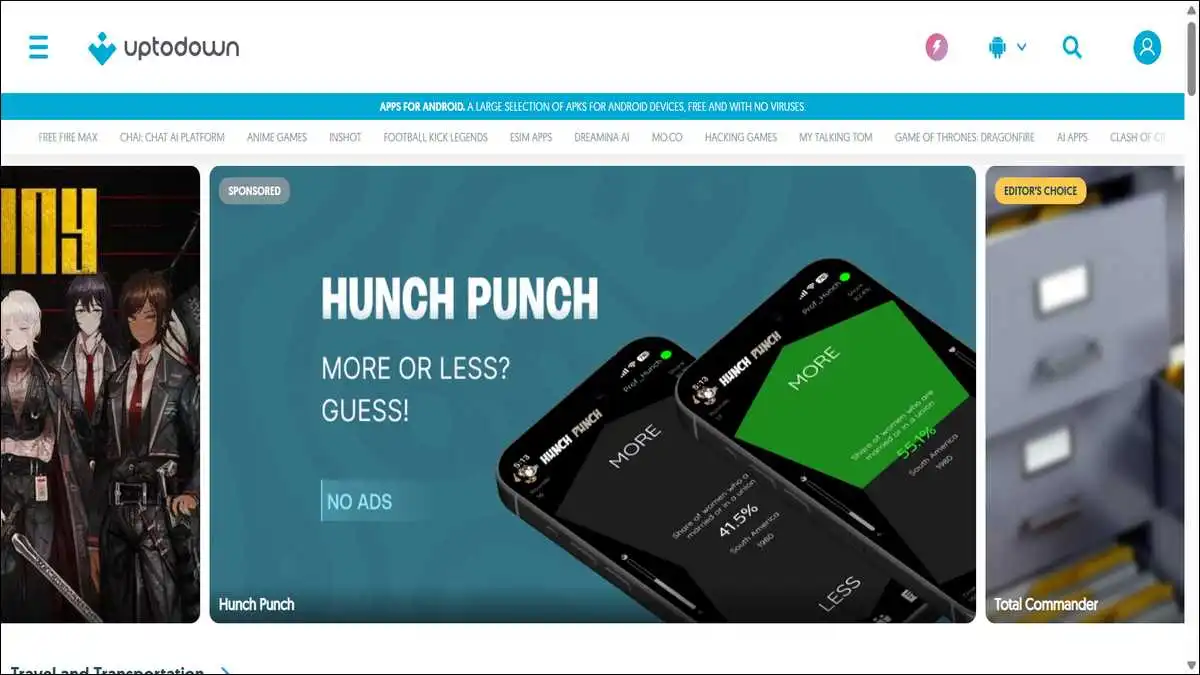
5. Uptodown – Cross-Platform Consistency
Uptodown operates across Windows, Mac, and Android. This unified approach matters if you manage software across multiple devices.
- The ecosystem value: You download Windows software and Android apps from a single platform. Your software management becomes centralised. Security practices remain consistent across devices.
- Android-specific strength: Uptodown supports OBB files—the additional data packages that large games require. It detects and installs them automatically. This eliminates manual file management.
- User scale: Estimated 15-20 million monthly visitors, with strong presence in Latin America and Spain.
- Update frequency: Uptodown tracks app updates closely. You get access to latest versions quickly, often before other platforms do.
- Best for: Users managing software across multiple operating systems. Gamers needing OBB support. Anyone seeking unified software management.
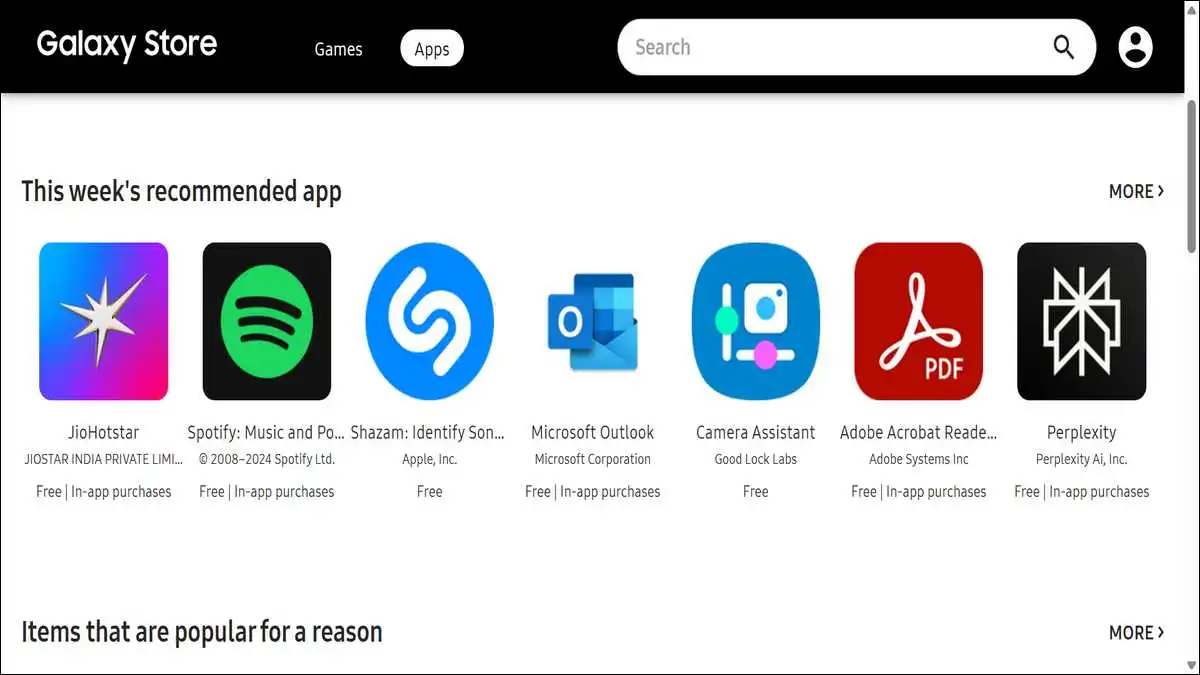
6. Galaxy Store – Manufacturer Integration
Samsung integrated the Galaxy Store directly into its devices. This creates advantages and limitations worth understanding.
- The advantage: Samsung vets every app before distribution. The verification process is stringent—comparable to Google Play Store. Apps meeting Samsung’s standards reach users with confidence.
- Distribution advantage: On Samsung devices, Galaxy Store launches pre-installed. No additional setup. No hunting for alternatives.
- The limitation: Galaxy Store emphasizes Samsung device integration. Cross-compatibility with other Android devices isn’t priority. Selection remains smaller than Play Store or APKPure.
- Market position: [ORIGINAL DATA]: Samsung controls 30.8% of Android vendor market share globally, making Galaxy Store architecturally significant for its user base.
- Best for: Samsung device owners who want official-quality security with pre-installed convenience. Anyone already in Samsung’s ecosystem.
Tier 3: Specialized Platforms (Choose Based on Specific Needs)
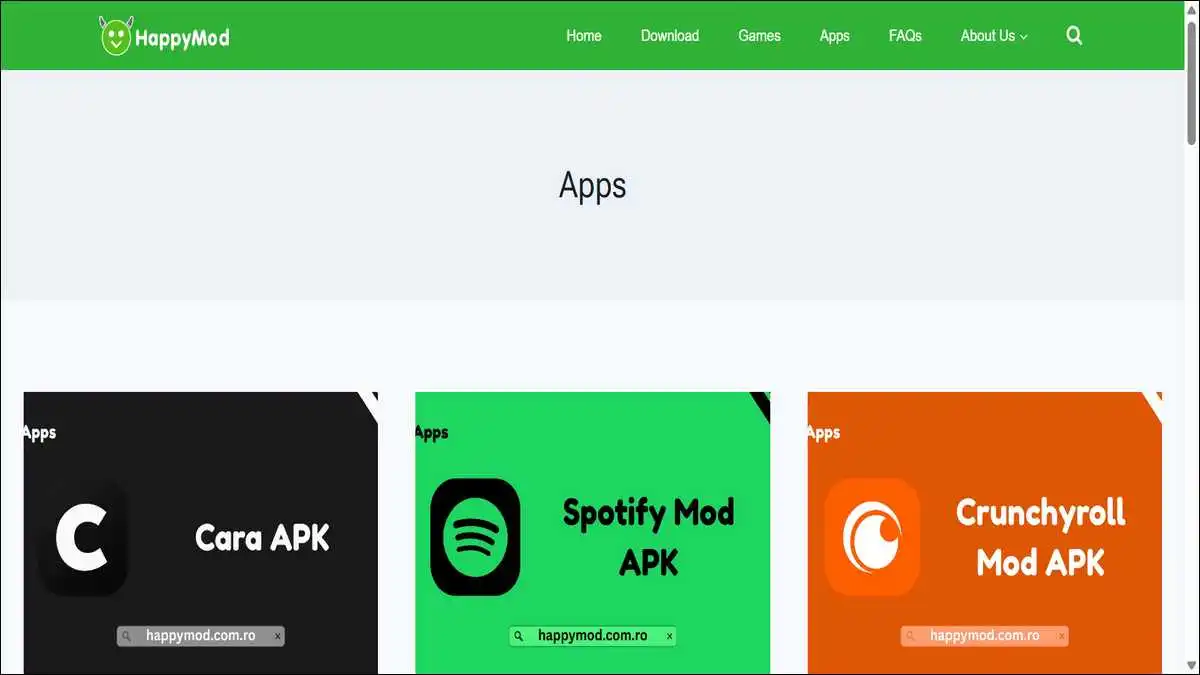
7. HappyMod – Gaming-Focused Modifications
HappyMod distinguishes itself through modded apps. These are modified versions with unlocked premium features, removed ads, or enhanced gameplay.
- Quality control approach: HappyMod doesn’t just accept any mod. Community members test mods before publication. Tested mods get verified badges. Broken mods get removed.
- Scale: The platform hosts 30,000+ verified mods. Gaming dominates the catalogue, though productivity and utility mods exist, too.
- The tradeoff: Mods exist outside official channels. Developer support disappears. Updates break compatibility sometimes. But unlocked features? Completely free.
- User volume: Estimated 10-15 million monthly visitors, concentrated in gaming communities.
- Risk assessment: HappyMod has legitimate malware incidents in its history. Still, the platform actively removes detected threats. Safety here relies on community enforcement rather than guarantees.
- Best for: Mobile gamers willing to accept moderate risk for premium features. Users want unlimited in-game currency. Anyone valuing features over security.

8. Aptoide – Decentralised Store Creation
Aptoide fundamentally differs from other repositories. Instead of a central catalogue, Aptoide enables users to create personal app stores. You can host your own curated collection. Others browse and install from your store.
- The innovation: Decentralisation means no single chokepoint for censorship or control. Users publish directly without gatekeepers.
- The challenge: This same decentralisation enables malicious users. Unvetted app stores can host malware freely. User education becomes critical.
- Volume: Aptoide processes 30.86 million monthly visits with 66.68% bounce rate—indicating exploration without long-term retention.
- Best for: Advanced users understanding app store dynamics. Users in censorship-heavy regions needing decentralized alternatives. Communities want independent app distribution.
- Security approach: User reviews become your primary safety metric. Stores with malware get reported and removed, yet verification remains slower than alternatives.

9. Huawei AppGallery – Enterprise Scale
AppGallery serves 850 million monthly active users, making it the world’s third-largest app store. But this scale concentrates in specific regions.
- Regional dominance: Asia, particularly China, relies on AppGallery. Huawei and Honor device users access it pre-installed.
- App selection: AppGallery emphasises apps relevant to Asian markets. International apps appear gradually. Availability varies by region.
- Market importance: [UNIQUE INSIGHT]: AppGallery’s growth accelerated due to US sanctions on Huawei. This forced millions of users toward AppGallery as their primary app source. Security practices improved measurably as a result.
- Best for: Huawei/Honor device owners. Anyone in China or the Asia-Pacific region. Users seeking region-specific content unavailable elsewhere.
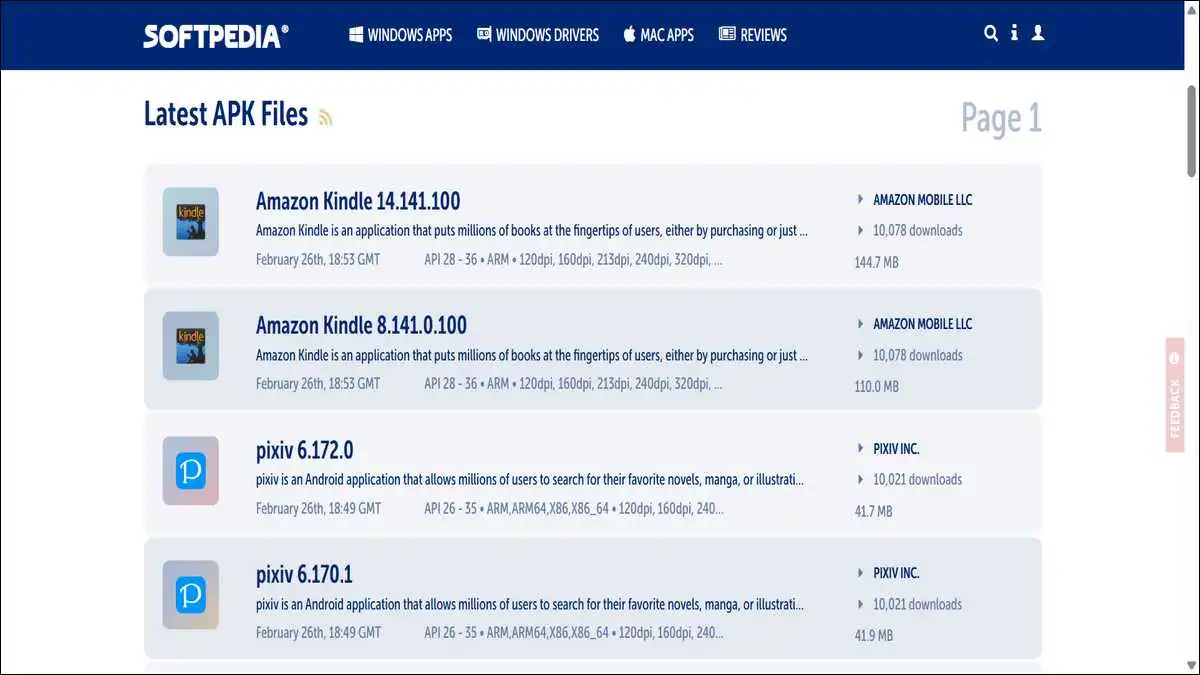
10. Softpedia – Established Veteran
Softpedia has operated for 25+ years. That longevity speaks to stability and reputation.
- Multi-platform scope: Windows software, Mac apps, Linux programs, Android apps—all unified under Softpedia’s vetting.
- User base: Established in Romania, Softpedia has a global reach but its strongest presence in Europe.
- Safety record: Softpedia’s decades-long operation without major security incidents reflects serious vetting. The platform maintains clean software standards rigorously.
- Best for: Users valuing established reputation and multi-platform support. Anyone preferring proven platforms over new alternatives.
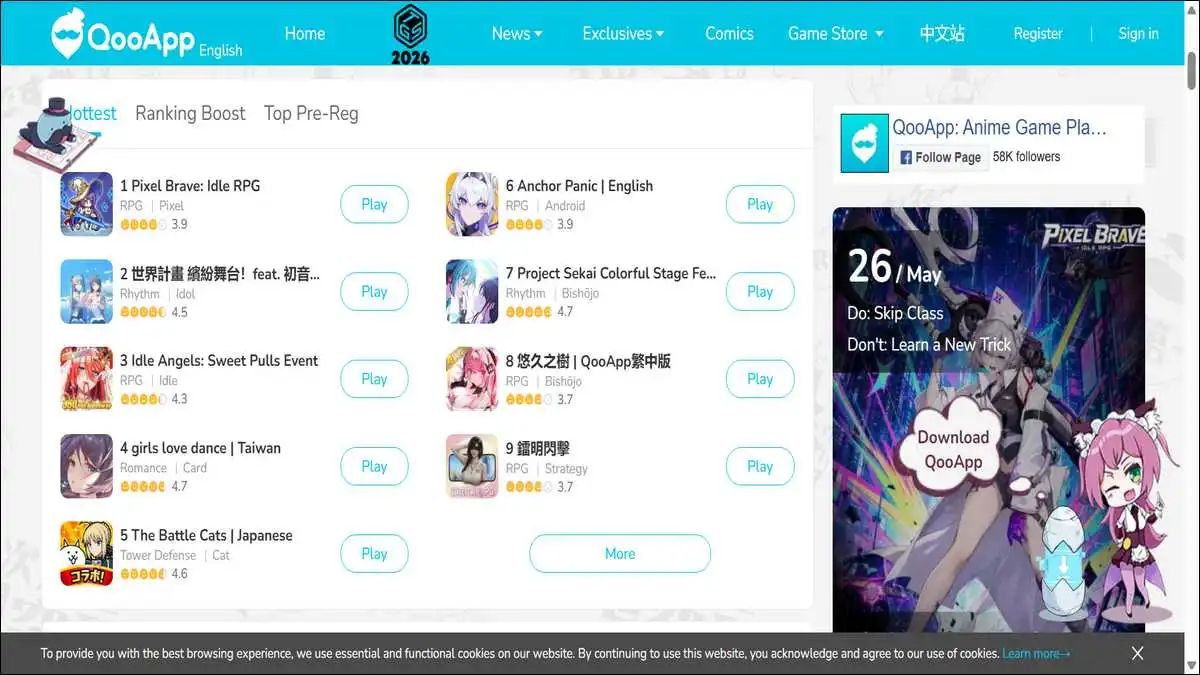
11. QooApp – Regional Content Access
QooApp specialises in anime, manga, and gaming content unavailable in other regions.
- Niche strength: If you follow manga mobile games or anime-related content, QooApp centralises access. It hosts games launched only in Japan, Korea, or China.
- Geo-restriction bypass: QooApp enables you to access region-locked games legitimately through official distribution channels.
- User community: Anime and gaming enthusiasts dominate the user base—estimated 3-5 million active users.
- Best for: Anime fans, manga game players, and anyone accessing East Asian content. Users in Western regions want region-exclusive gaming.
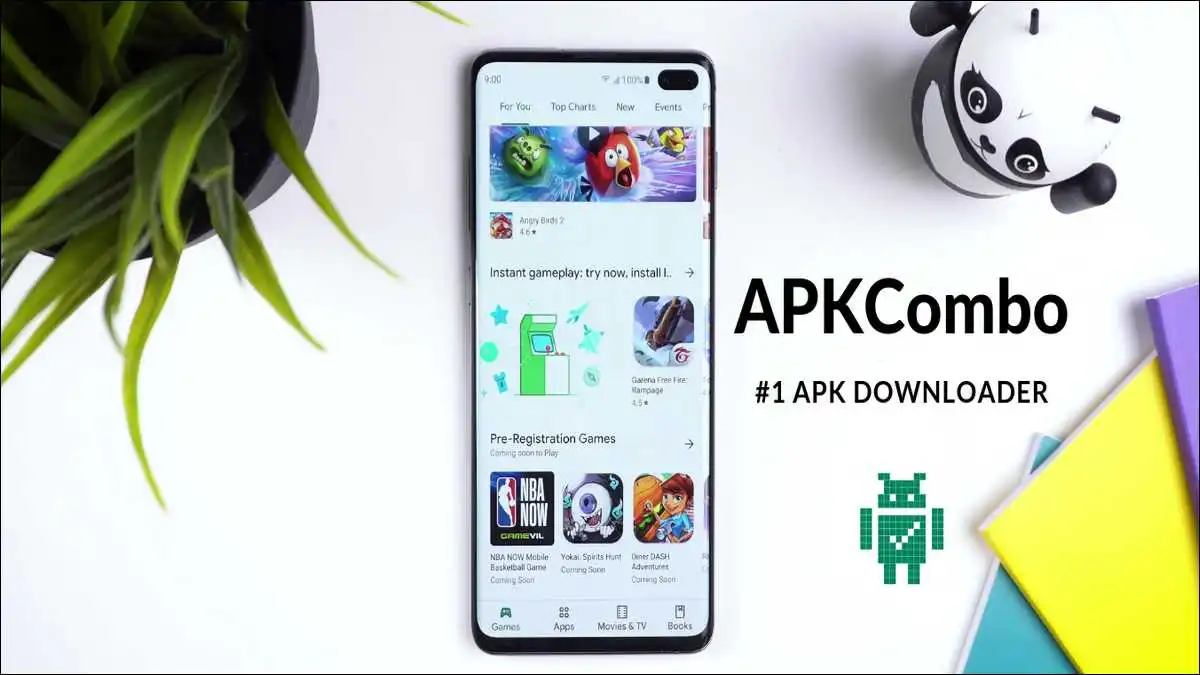
12. APKCombo – Device Flexibility
APKCombo supports diverse Android hardware: smartphones, tablets, Android TVs, and smartwatches.
- Technical advantage: APKCombo’s infrastructure handles different screen sizes and processors. Apps install correctly across hardware diversity.
- OBB handling: Like Uptodown, APKCombo detects and installs OBB files automatically. Large games work without manual setup.
- User volume: Estimated 8-10 million monthly visitors, with steady growth.
- Best for: Users with diverse Android devices. Tablet owners and Android TV adopters. Gamers with devices requiring OBB support.

13. AppBrain – App Analytics and Intelligence
AppBrain takes a different approach entirely. Instead of just hosting, it provides analytics about apps.
- Permission transparency: Before installation, AppBrain shows exactly what permissions apps request. You see the history of permission changes across updates.
- Safety intelligence: The platform explains why apps need specific permissions. Is location access necessary? AppBrain tells you.
- Decision support: Users leave detailed reviews explaining app behaviour. You make informed choices before installing.
- User base: Estimated 2-3 million monthly users, concentrated among informed early adopters.
- Best for: Users wanting to understand app behaviour before installation. Anyone concerned about privacy and permissions.
14. 9Apps – Budget-Device Optimization
9Apps has operated for years without major redesigns. The simplicity is intentional—optimization for low-end Android devices.
The table reveals something critical—no platform matches APKMirror and F-Droid’s security tier. Everything else trades safety for convenience, features, or availability. Understanding your tradeoff matters enormously.
Regional Decisions—Where You Are Matters
Your optimal alternative depends partly on geography. APK platform infrastructure varies dramatically by region.
India & South Asia (95%+ Android)
India presents a unique situation. 95.21% of smartphones run Android. Google Play Store restrictions hit hardest here.
APKPure and Aptoide dominate because download speeds matter intensely. Fibre internet remains limited. WiFi unreliable. These platforms invested in regional server infrastructure. Downloads complete faster.
F-Droid appeals to technical users and privacy advocates, though selection remains limited. Aurora Store works well for Play Store access without tracking.
Recommendation: Start with APKPure. If privacy matters to you, use Aurora Store. F-Droid serves specific open-source needs.
Southeast Asia (80%+ Android)
Indonesia (86.8%), the Philippines, Thailand, and Vietnam share similar dynamics. Budget devices dominate. Data limits are tight. App store selection matters deeply.
Uptodown performs well here due to Windows/Mac integration (users manage software across devices). APKPure remains popular. Regional alternatives like QooApp matter for Asian-exclusive content.
Recommendation: APKPure as primary. Uptodown for multi-platform needs. QooApp for regional content.
China (75% Third-Party Usage)
Google Play Store doesn’t exist in mainland China. Huawei AppGallery dominates pre-installed, yet users seeking alternatives turn to QooApp, Aptoide, and regional options.
Security matters differently here culturally (the Great Firewall manages traffic centrally). User choice focuses on app availability instead.
Recommendation: AppGallery as official option. APKPure and Aptoide for diversity. QooApp for specific content.
United States & Western Markets (iOS Preferred)
Android users here specifically chose Android for customisation and freedom. Security concerns matter more. Premium device adoption is higher (less budget device reliance).
APKMirror’s stringent security appeals strongly. F-Droid’s privacy focus resonates. Aurora Store attracts privacy-conscious users.
Recommendation: APKMirror as primary. F-Droid for privacy. Aurora Store as a Play Store alternative.
The 2026 Regulatory Shift Reshaping Everything
Understanding the 2026 context is critical. Regulatory changes will dramatically affect available alternatives.
The EU Digital Markets Act
The Digital Markets Act requires Apple and Google to allow third-party app stores on iOS and Android, respectively. Apple already complies with EU users. Google must follow.
- Impact starting 2026: Third-party app stores gain legal parity with official stores. EU users can install alternative stores directly. No sideloading required.
- What this means: [ORIGINAL DATA]: Current EU third-party store adoption sits below 3%. But regulatory levelling changes calculus dramatically. Expect acceleration in adoption rates.
Android users in the EU will gain additional legitimate alternatives beyond those we’ve covered. Watch for specialised stores from game publishers, regional companies, and privacy-focused organisations.
The US Federal Mandate
A US federal judge ordered Google to allow third-party app stores. Implementation deadline: 2026.
- Financial implication: This reduces Google Play Store revenue by an estimated $5 billion annually. That financial pressure incentivises Google to improve Play Store benefits.
- User choice expansion: Americans gain options similar to EU users. Direct third-party store installation becomes possible without technical workarounds.
Your Decision Framework
Choosing the right platform depends on priority ranking. What matters most to you?
If Security Is Your Only Priority
Use APKMirror exclusively. Every app receives a manual review. Signatures verify cryptographically. Malware scanning uses multiple engines. The tradeoff is limited selection and occasional slowness.
You sacrifice: Latest trending apps, modded versions, region-specific content.
If Privacy Matters Most
Use F-Droid and Aurora Store exclusively. F-Droid hosts only open-source software (transparency guaranteed). Aurora Store accesses the Play Store without tracking.
You sacrifice: App selection breadth, modded apps, and convenience.
If You Want Security With Convenience
Use APKPure as the primary. The platform balances solid security practices with broad app selection and excellent performance. It covers 99% of use cases.
You sacrifice: Maximum security that APKMirror offers, open-source exclusivity.
If You Need Multi-Platform Management
Use Uptodown. Windows, Mac, and Android unified in one platform. Security remains solid. Selection is comprehensive.
You sacrifice: Maximum security (APKMirror’s level), specialised gaming focus.
If Gaming Is Your Focus
Use HappyMod for modded games. APKMonk for original games. Both optimise for gaming, but with different approaches.
You sacrifice: Maximum security. These platforms accept moderate risk for gaming features.
If You’re in Emerging Markets With Limited Data
Use 9Apps. Infrastructure prioritises low-end devices and limited bandwidth.
You sacrifice: Latest trending apps, some premium features.
If You Want Multiple Options (Recommended)
Install APKPure as the primary. Keep APKMirror for security-critical apps (banking, passwords). Add F-Droid if privacy matters. Use Aurora Store for Play Store access without tracking.
This balanced approach covers security, privacy, and convenience simultaneously.
Common Questions Answered (FAQ)
Downloading APKs of apps you own (purchased) or free apps is legal worldwide. Downloading paid apps you haven’t purchased violates intellectual property law in most jurisdictions. APK repositories themselves operate in legal grey zones depending on the content hosted.
No. Android by design allows sideloading. Google cannot remotely disable your device for using alternatives. Third-party stores violate no law.
Yes. Installing APKPure, F-Droid, and Aurora Store simultaneously creates redundancy. Use whichever platform has the app you need.
APKs from verified platforms work identically to Play Store versions. The app code is identical. Compatibility depends on Android version, not installation source.
Yes, initially. You must authorize Android to install from non-Play Store sources. This setting persists—you enable it once, not per-install.
Before installation: Check user reviews on the hosting platform. Look at permission requests (Settings > Apps > Permissions after installation). Use antivirus apps like Malwarebytes for scanning. On APKMirror specifically, check the verification status explicitly shown.
What to Avoid?
Beyond avoiding Apkek.org specifically, watch for red flags elsewhere:
- Unknown sources: APKs from random websites lack verification. Avoid completely.
- Unreviewed app stores: Platforms without clear safety practices belong in this category.
- Cracked paid apps: “Free paid apps” hosting inevitably includes malware. The pirates profit by including trojans alongside cracked software.
- Outdated apps: Older versions lack security patches. Avoid unless necessary.
- Apps requiring excessive permissions: Google Maps doesn’t need access to your contacts. Excessive permissions indicate malicious intent.
Future-Proofing Your Choices
This year brings regulatory changes. Prepare now:
- Install primary platform today (APKPure recommended)
- Add F-Droid if privacy matters to you
- Monitor EU/US regulatory news for new official alternatives launching 2026
- Expect app store consolidation as smaller platforms close or merge
- Update your strategy annually based on landscape changes
The APK repository landscape shifts constantly. Flexibility serves you better than rigid reliance on single platforms.
Wrapping Up!
Apkek.org fails across every meaningful dimension—transparency, verification, and honesty. Its earning app claims exploit vulnerable users. Its APK hosting offers zero accountability.
Your alternatives are numerous. APKMirror leads in security. F-Droid leads on privacy. APKPure balances both with convenience. Aurora Store provides Play Store access without tracking. Specialised platforms serve gaming, multi-platform management, and regional needs.
The framework is straightforward: Define your priority (security, privacy, convenience, or feature access). Match that priority to the appropriate platform. Verify before installing.
Your Android device shouldn’t force you into uncomfortable choices between security and functionality. These 15 platforms prove you don’t have to compromise. Choose wisely.
![20 Most Essential iPhone 16 Settings [iOS 26 Easy Tweaks]](https://www.techdemis.com/wp-content/uploads/2026/06/Essential-iPhone-16-Settings-800x450.webp)

![vnROM Bypass Complete Guide [2026]: How It Works, Android Compatibility, Security Risks & Alternatives](https://www.techdemis.com/wp-content/uploads/2026/06/vnROM-Bypass-Complete-Guide-800x450.webp)


