Understanding Widevine DRM Within Modern Content Security Systems
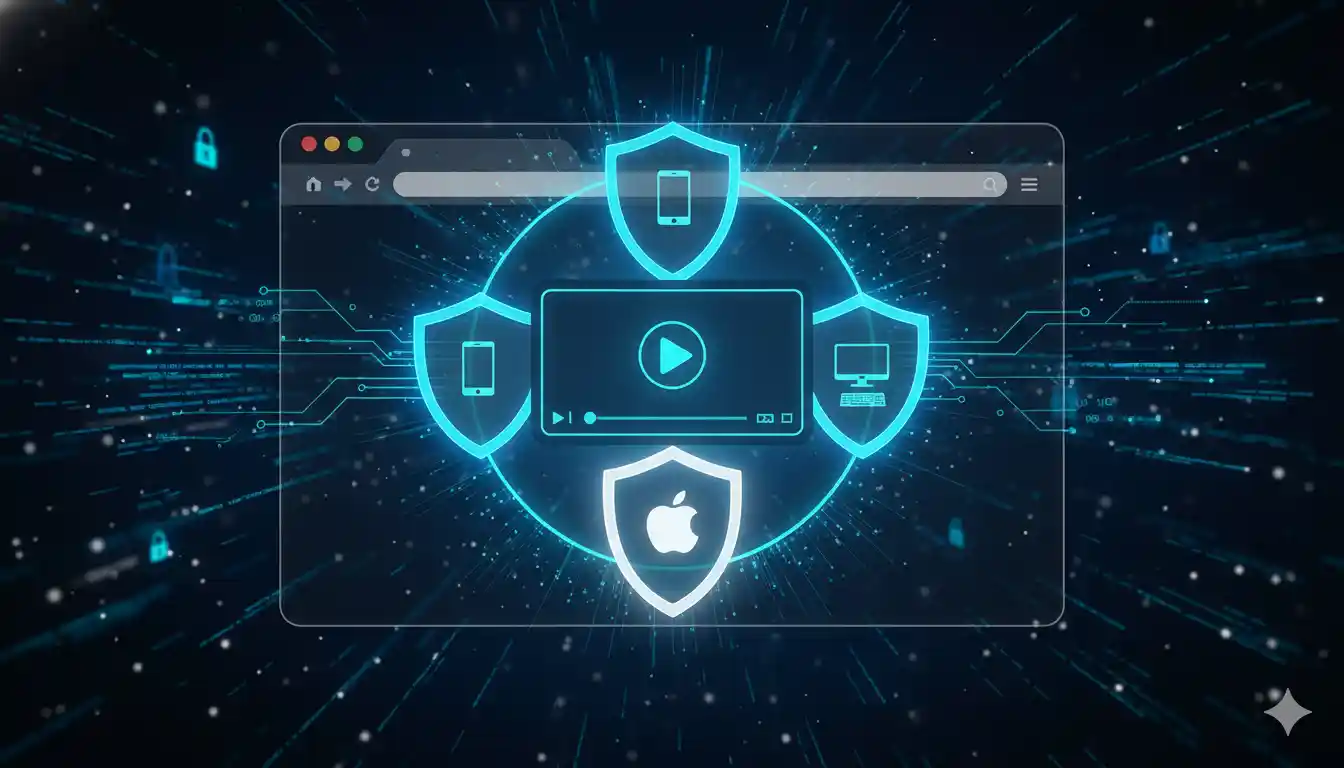
Premium video platforms depend on encryption to prevent unauthorized viewing, but encrypted files alone cannot protect valuable content. Every playback request must verify that the viewer, device, and application satisfy licensing requirements before decryption is allowed. During this secure exchange, Widevine DRM enables compatible devices to obtain the keys needed for authorized playback while keeping protected media inaccessible to unauthorized users.
Rather than acting as a complete security solution by itself, the DRM workflow operates alongside secure license delivery, application integrity checks, authentication, and runtime protection. These additional safeguards strengthen the license exchange, reduce opportunities for key extraction, and help streaming providers defend premium content against increasingly sophisticated attacks.
Why Encryption Alone Cannot Protect Premium Content
Encrypting a video file prevents unauthorized users from reading the media, but encryption has little value if the decryption key is exposed during playback. Modern DRM workflows therefore focus on protecting both the content and the license exchange. Every playback request must prove that the user, device, and application satisfy security policies before the license server returns the key needed for decryption. This verification process keeps access under continuous control instead of relying on encryption alone.
Attackers increasingly target license transactions because compromising a valid key can expose premium content without attacking the encrypted video itself. To reduce this risk, secure implementations validate authentication tokens, protect license communications, and apply additional verification before responding to client requests. These measures make automated key harvesting and manipulated license requests significantly more difficult.
The License Server Controls Every Playback Request
When a viewer presses Play, the media player first contacts a DRM license server instead of immediately decrypting the content. The server verifies subscription status, device eligibility, geographic policies, and authentication before issuing a license, ensuring only authorized environments receive decryption rights.
Device Security Determines Content Quality
Not every supported device offers the same level of protection. Premium streaming services evaluate the security capabilities of the playback environment before determining which quality level can be delivered. Hardware-backed protection generally provides stronger resistance against key extraction than software-only environments, allowing providers to apply higher-value content policies where appropriate.
Authentication Extends Beyond User Credentials
A successful login does not automatically qualify a playback request for license issuance. The DRM workflow also verifies whether the requesting application, playback environment, and device satisfy security policies established by the content provider. If authentication tokens are invalid, expired, or manipulated, the license server rejects the request before any decryption keys are released. This layered validation strengthens access control without affecting legitimate viewers.
Secure Client Integration Reduces Attack Opportunities
DRM clients are responsible for securely requesting licenses and handling protected playback across supported platforms. Enterprise implementations use SDKs that support secure communications, offline playback controls, certificate-based license management, and runtime protection to reduce opportunities for key extraction or client-side manipulation. By strengthening the playback application itself, providers reduce vulnerabilities that attackers commonly exploit.
Multi-DRM Delivers Consistent Protection Across Devices
Premium content is consumed on smartphones, smart TVs, browsers, tablets, and streaming devices, each supporting different DRM technologies. Relying on a single protection standard would leave large portions of the audience unsupported. Multi-DRM platforms solve this challenge by automatically selecting the appropriate DRM technology for each compatible device while maintaining a unified license management workflow. This allows providers to deliver secure playback without building separate protection systems for every platform.
Enterprise deployments also simplify operations through centralized packaging, cloud-based license services, SDK integration, and API-driven workflows. Multi-DRM enables content providers to manage encryption, license issuance, and playback security from a single ecosystem while supporting multiple operating systems and playback environments. The result is stronger protection with less operational complexity for OTT services, broadcasters, and digital learning platforms.
- Unified content packaging for multiple playback platforms
- Centralized license management and policy enforcement
- SDKs and APIs for streamlined integration
- Cloud-based deployment that scales with audience growth
DRM Protects Playback, Not Every Threat
Even after secure license delivery, content remains exposed to risks such as screen recording, credential sharing, application tampering, and illegal redistribution. Because these attacks occur after decryption, additional security layers become essential for protecting premium media throughout the viewing session.
Organizations therefore combine DRM with forensic watermarking, anti-piracy monitoring, runtime application protection, and secure playback environments. Each technology addresses a different stage of the attack chain, allowing providers to detect leaks, trace unauthorized copies, and respond quickly without affecting legitimate viewers.
Security Must Continue After License Delivery
Receiving a valid DRM license does not eliminate security risks. Once content is decrypted for playback, attackers may attempt screen capture, application tampering, credential sharing, or unauthorized redistribution. Protecting premium media therefore requires continuous enforcement throughout the viewing session rather than ending security checks once playback begins.
Streaming providers increasingly combine playback protection with runtime application security, forensic watermarking, subscription access controls, and anti-piracy intelligence. Each layer addresses a different attack stage, making it significantly harder for piracy networks to extract, redistribute, or monetize protected content while preserving a seamless experience for legitimate subscribers.
- Runtime application protection defends against reverse engineering and application tampering.
- Forensic watermarking embeds invisible identifiers into every playback session.
- Anti-piracy monitoring identifies unauthorized streams across websites, IPTV platforms, and social media.
- Subscription access controls reduce credential sharing through device fingerprinting and session validation.
Final Thoughts
Could a stronger DRM strategy begin long before a viewer presses Play? Protecting premium content requires much more than encrypting video files. Secure license delivery, playback integrity, runtime protection, forensic watermarking, and continuous anti-piracy monitoring work together to defend content throughout its lifecycle. By combining these technologies into a unified security platform, Doverunner helps broadcasters, OTT providers, and digital content owners strengthen protection while delivering a reliable viewing experience across supported devices.