University Research Computing: Infrastructure Supporting Big Data and Simulations
University research environments are becoming significantly more data-intensive in 2026. From AI model training and genomics pipelines to climate simulations and high-performance computing workloads, research institutions now require infrastructure capable of handling massive datasets, scalable compute demand, and continuous operational uptime.
Many universities, however, still rely on fragmented infrastructure environments built incrementally over years of departmental expansion. As research workloads continue growing, these legacy architectures increasingly struggle to deliver the performance, flexibility, and reliability modern academic institutions require.
As a result, research computing infrastructure has become a strategic priority for universities looking to modernize scientific computing environments while maintaining operational efficiency and budget control.
Why Traditional Server Setups Fall Short
Let’s be real. A bunch of standalone physical servers used to be enough. That was understandable ten years ago, sure.
Today? It’s a headache waiting to happen.
Researchers don’t have time to wait around. They need environments spun up quickly, workloads that scale instantly, and storage that keeps up. This is especially important when a huge simulation is running.
Common infrastructure challenges reported by university IT departments include:
- Setting up new compute environments takes way too long
- Storage systems don’t communicate properly
- A single hardware failure can wipe out active experiments
- Budgets are tight… but expectations keep rising
And honestly, the worst part? Timing.
Failures never happen at a “good” moment. Imagine your climate model crashing halfway through. That’s not just inconvenient, it’s weeks of work gone. No redo button. No second chance.
Why are traditional university server infrastructures becoming difficult to manage?
Traditional university infrastructures often rely on fragmented compute, storage, and networking systems that struggle to support modern AI, simulation, and big data research workloads efficiently.
What a Modern Research Computing Infrastructure Actually Needs
A solid research setup today needs a few must-haves. Fast storage with low latency, flexible compute that can handle both heavy batch jobs and real-time workloads, strong networking with no bottlenecks, are a must. Built-in redundancy is also non-negotiable, because things will fail at some point.
What is Research Computing Infrastructure?
Research computing infrastructure refers to the hardware, software, and networking resources that universities and research institutions use to support data-intensive scientific workloads, including simulations, big data analytics, and AI model training.
This is exactly where hyperconverged infrastructure (HCI) comes in. Instead of juggling separate systems for compute, storage, and networking, HCI brings everything together into one software-driven platform. One dashboard. Easier scaling. Less chaos.
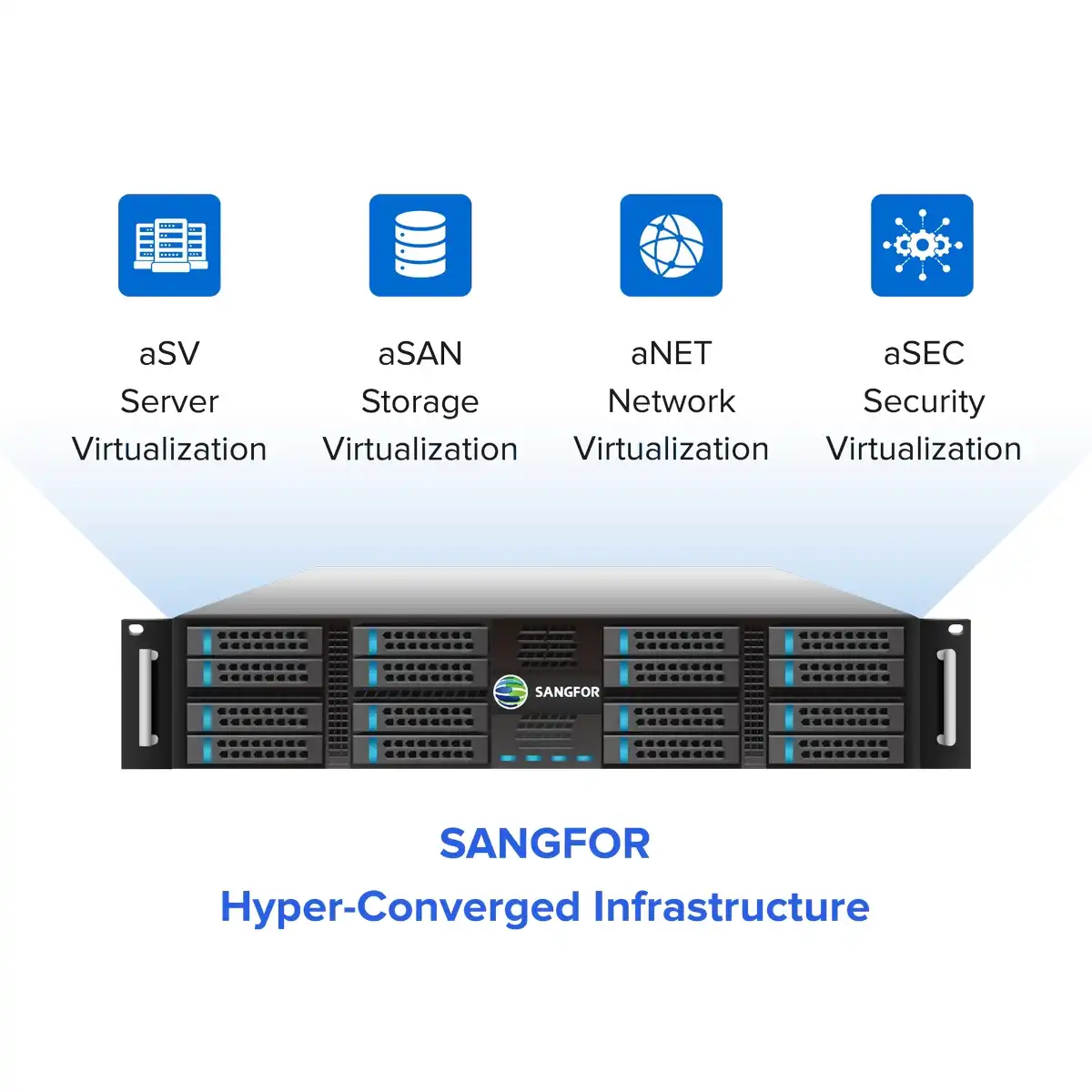
That combination becomes even more efficient with Sangfor HCI, as they also include security through their aSEC. In addition, Sangfor HCI has also gained strong recognition across enterprise analyst and peer-review platforms.
Gartner Peer Insights reviewers frequently highlight deployment simplicity, centralized management, scalability, and virtualization efficiency, while G2 users consistently reference operational flexibility and ease of infrastructure management.
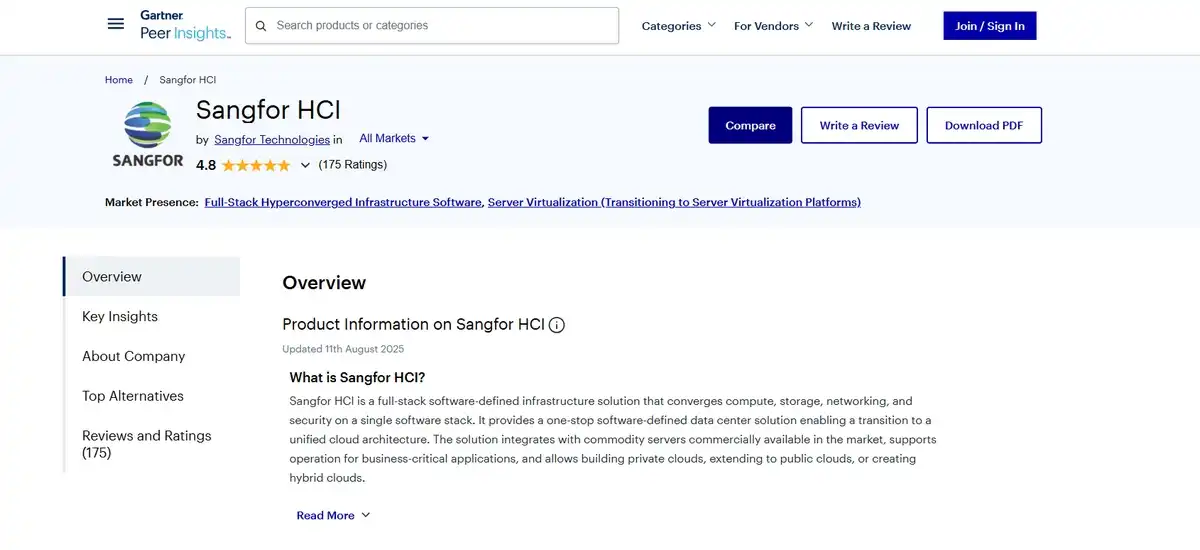
As of 21/05/2026, Sangfor HCI maintains ratings of 4.8/5 on Gartner Peer Insights and 4.7/5 on G2.
From what we’ve seen, that simplicity makes a big difference for IT teams.
The Role of Virtualization in Academic Research Environments
A lot of this works because of Server Virtualization Software. It’s kind of the “unsung hero” here.
Platforms like VMware vSphere have long set the standard for enterprise-grade virtualization in data centers, although institutions are increasingly evaluating more integrated HCI solutions that combine virtualization with storage, networking, and security in a single platform.
Virtualization lets you slice one physical server into multiple virtual machines. So instead of dedicating an entire server to one project, you can run dozens of workloads at once. A genomics lab and a physics department can share the same hardware without stepping on each other’s toes.
Now, here’s where it gets interesting.
Some research workloads, like deep learning or massive simulations, need even more performance. That’s where a Bare Metal Hypervisor comes into play. It runs directly on hardware, skipping the usual operating system layer.
Why does that matter? Less overhead, better performance, and lower latency are the answer.
What is a bare metal hypervisor used for in research computing?
A bare metal hypervisor is installed directly on server hardware without a host operating system, making it ideal for performance-sensitive research workloads like large-scale simulations and AI model training, where low latency is critical.
Why is server virtualization important for research computing infrastructure?
An integrated server virtualization solution like Sangfor HCI improves hardware utilization, enables flexible workload deployment, and allows multiple research teams to share infrastructure resources more efficiently without sacrificing performance.
Real-World Proof: IBA Pakistan’s HPC Deployment with Sangfor
A practical example comes from the Institute of Business Administration (IBA) in Pakistan, which required a more scalable and reliable platform for AI research, deep learning workloads, and high-performance computing operations. After modernizing its environment with Sangfor HCI, the institution improved infrastructure stability, centralized management, and workload scalability while supporting increasingly complex research requirements.
The deployment also helped simplify infrastructure operations and reduce the management overhead commonly associated with fragmented legacy systems.
Sangfor HCI: Built for Environments That Can’t Afford Downtime
Sangfor HCI basically bundles compute, storage, networking, and security into one platform. For IT teams, that’s a big relief. You’re not juggling multiple vendors or patching together different systems anymore.
It also supports GPU workloads (great for AI), scales easily by adding nodes, and has built-in disaster recovery.
In short, researchers stay productive. IT teams gain simplified infrastructure management and operational visibility.
Is Sangfor HCI suitable for university research computing?
Yes. Sangfor HCI is a strong fit for university research computing environments. It supports high-performance workloads, GPU-accelerated computing, scalable storage, and built-in redundancy, all managed through a single console.
Which HCI platform supports AI and high-performance research workloads in universities?
Sangfor HCI supports AI training, GPU-accelerated computing, scalable storage, virtualization, and disaster recovery capabilities, making it suitable for modern university research computing environments.
What the Industry Says About Sangfor
Now, it’s not just internal success stories. Sangfor has been getting strong recognition across the industry, too.
For six years in a row, it’s been named a “Strong Performer” in Gartner Peer Insights Voice of the Customer for Full-Stack HCI. Even more impressive? It scored a perfect 100% willingness-to-recommend rating from verified users.
That’s the kind of feedback you don’t ignore.
It’s also been listed in the 2025 Gartner Market Guide and ranked among the top five HCI vendors globally by revenue in 2024. For procurement teams, that kind of validation makes decisions easier.
Do More with Less
Universities today are expected to do more, with less. More research, more innovation… but without huge increases in budget.
A well-designed research computing infrastructure, especially one built on HCI, can bridge that gap. It offers performance, flexibility, and reliability without the usual complexity.
If your university is rethinking its setup, it might be time to explore smarter options. Request a demo of Sangfor HCI and see how it fits your research computing requirements.