Ladybird browser cuts memory usage by nearly 80% ahead of alpha release
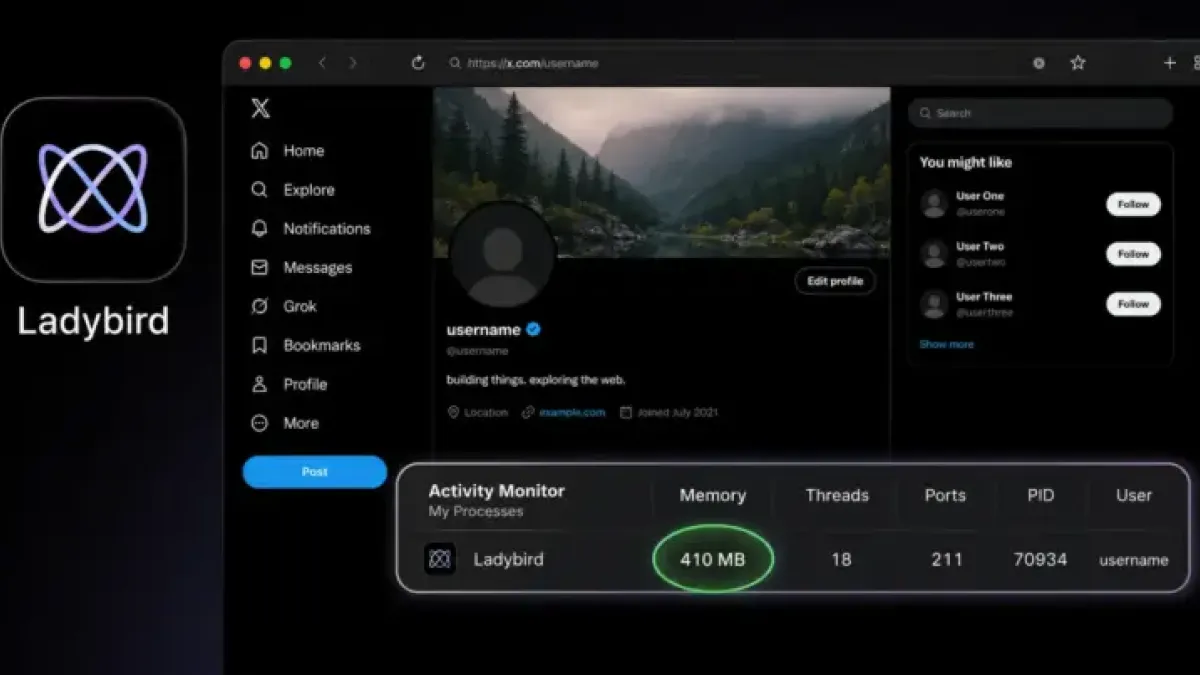
Developer Andreas Kling has dramatically reduced the memory footprint of his in-development Ladybird browser, bringing it down nearly 80% from its peak usage in under two months.
Kling tested the browser’s WebContent process — the component responsible for rendering web pages — by loading his own X profile. The activity monitor showed it consuming 359 megabytes of RAM. Three weeks earlier, the same test required 623 megabytes. Back in mid-May, that figure stood at 1.72 gigabytes.
The gains are significant in context. Many modern browsers are notorious for heavy resource consumption, with Google Chrome and Microsoft Edge routinely chewing through gigabytes of system memory across just a few open tabs. One user responding to Kling noted their X profile alone consumed 1.6 gigabytes on a Chromium-based browser.
Kling is building Ladybird entirely from scratch, refusing to borrow code from existing browser engines such as Blink or WebKit. The team made one notable exception, adopting Brave’s engine for Ad Blocking rather than building their own. Despite the recent progress, Kling still considers 359 megabytes too high for a single webpage and intends to keep reducing the figure.
The core development team recently paused external contributions to stabilize the codebase ahead of an upcoming alpha release. Alongside memory work, the team must also add missing features — such as vertical tabs — while ensuring the browser handles modern web standards reliably.