Google claims a Chrome flag defaulting to AI Mode was just an “error”
Google Search Vice President Rajan Patel denied that the company plans to make AI Mode the default search experience in Chrome, pushing back after an experimental browser flag sparked sharp criticism online.
The controversy started when a hidden testing flag surfaced in Chrome Canary, the browser’s early-stage development build. When enabled, the flag intercepted standard address bar searches and routed them directly into conversational AI threads, bypassing traditional web results entirely.
What the Flag Actually Did
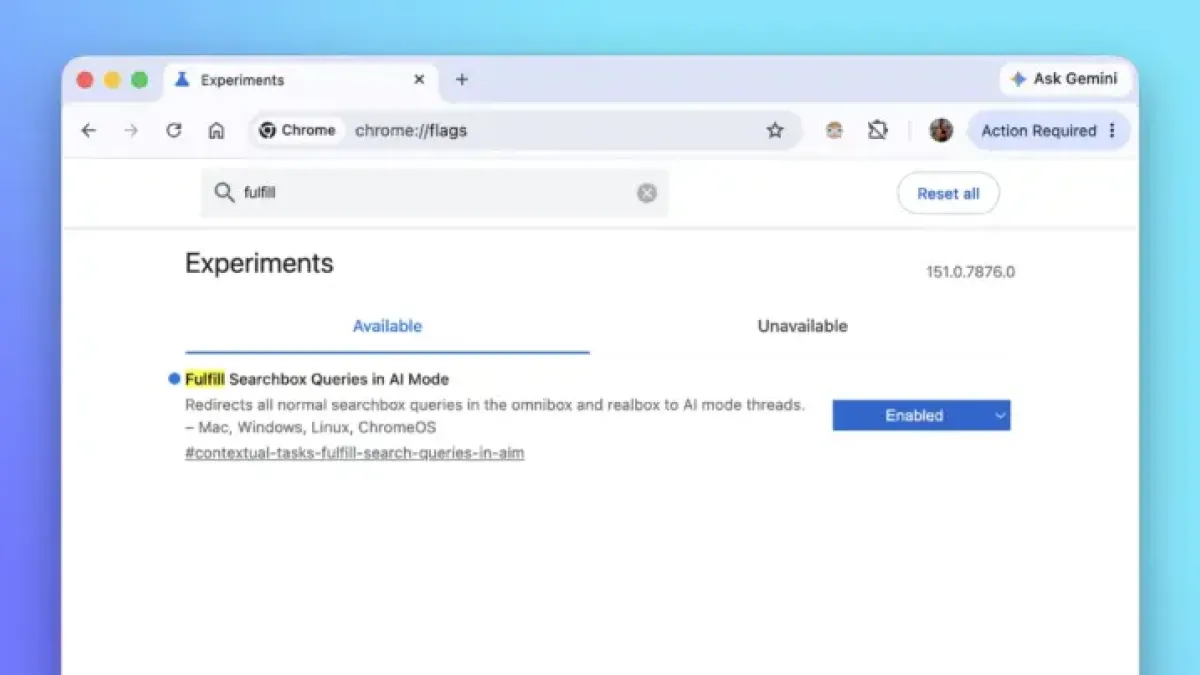
Windows Report first spotted the flag, labeled internally as “Fulfill Searchbox Queries in AI Mode.” Enabling it changed how both the main address bar and the New Tab Page search field behaved. Any typed keyword skipped the familiar list of web links and triggered an AI-generated response instead.
PiunikaWeb confirmed the behavior firsthand on Chrome Canary version 151.0.7876.0. After enabling the flag through Chrome’s experimental settings page and restarting the browser, every search went straight to AI Mode.
The developer behind the original code commit included a note describing the flag as exploratory, with no immediate plans to push the behavior to Chrome’s stable release.
Why the Denial Didn’t Fully Land
Patel called the flag’s public appearance an “error” in a reply to SEO consultant Glenn Gabe on X, stating that Google has no plans to force AI Mode onto standard searches. But the response drew skepticism from web publishers and browser trackers who had already flagged the setting.
The doubt is not without basis. Google has been steadily expanding AI across its products. A survey circulated last year asked users to compare the standard search experience against AI Mode, suggesting the company is actively building a case for wider AI adoption. A post from Google AI Studio lead Logan Kilpatrick also previously implied AI Mode could eventually become the default, though that claim was later walked back.
A Broader Pattern
The routing flag fits into a wider push Google is making on AI-powered desktop tools. Last week, developers added a floating search widget called the Everywhere Omnibox to Chrome Canary under the internal name Project Loom. The feature lets users call up a standalone Gemini — Google’s AI assistant — search field anywhere on their operating system using a keyboard shortcut.
Google has not said whether the underlying routing code will stay in the Chromium repository, the open-source base for Chrome. The flag remains active in the latest Chrome Canary build.