DuckDuckGo ‘No AI’ Search Page Traffic Triples After Google’s AI Search Overhaul
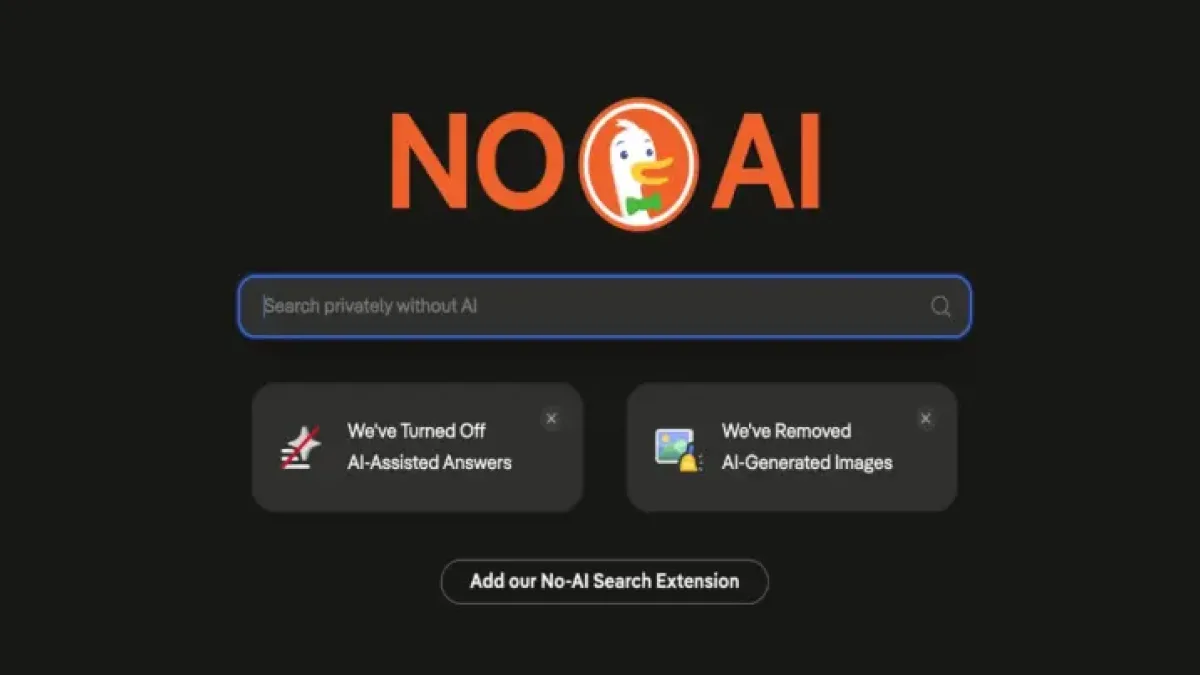
Visits to DuckDuckGo’s dedicated “No AI” search page tripled in the days after Google pushed its AI-powered Search Overhaul live, the privacy-focused search company said in a post on X.
DuckDuckGo tied the spike directly to user reaction following Google’s mid-May I/O developer conference, where the company announced a deeper integration of its conversational AI Mode into the main search interface.
Google Pushes AI Deeper Into Search
Google’s updated interface routes users through AI-generated overviews — algorithmic summaries produced before traditional web links appear — as the default experience.
Google said the system reaches more than one billion users, citing strong adoption figures at I/O in May.
Still, a measurable segment of users pushed back by seeking out search Tools That strip out AI-generated content entirely.
DuckDuckGo Moves to Capture Defectors
DuckDuckGo moved quickly to highlight its No AI search tools following the traffic surge, promoting a dedicated Firefox add-on and a Chrome extension designed to lock browsers to a version of its engine that removes AI summaries and filters AI-generated images.
The extensions hardcode the browser to that stripped-down interface, leaving users no path back to AI-augmented results unless they uninstall them.
That said, DuckDuckGo carries structural limitations that could blunt its ability to hold onto new arrivals.
The company pulls its core web results from Microsoft Bing — a platform that has itself embedded AI models, including OpenAI-powered Copilot features, throughout its own search product.
DuckDuckGo’s indexing gaps, a long-standing criticism from power users, stem in part from that dependency.
Market Share Remains Small
DuckDuckGo held roughly 1.8% of the U.S. search market as of early 2025, according to Statcounter, making it a distant player behind Google’s dominant position.
Google controlled approximately 89% of the global search market during the same period, per Statcounter data.
The traffic spike to DuckDuckGo’s No AI page signals genuine user frustration with AI-first search design, but a one-time surge does not translate automatically into sustained adoption.
Users who find DuckDuckGo’s results incomplete or unreliable for specialized queries have historically returned to Google, even when privacy or interface concerns initially drove them away.
DuckDuckGo launched in 2008 and built its user base primarily on a privacy-first pitch — it does not store user search histories or build behavioral profiles for ad targeting, a direct contrast to Google’s core advertising business model.