Google Chrome for Android Moves Tab Button to Bottom Bar in Canary Test Build
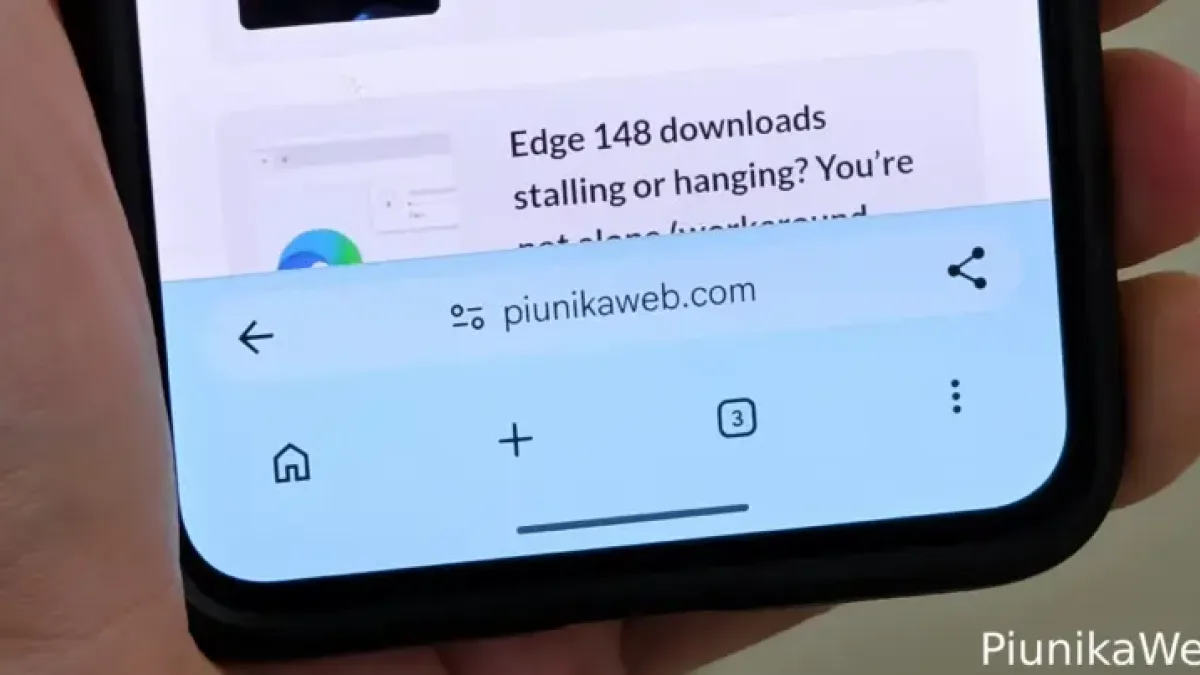
Google’s Chrome browser for Android is testing a fix that places the tab switcher button at the bottom of the screen alongside the address bar — including on the new tab page, where it previously never appeared.
The change surfaced in Chrome Canary build 150.0.7869.0, the experimental release channel Google uses to trial features before wider rollout.
What Changed
Enabling the `#android-bottom-bar` flag at `chrome://flags` and selecting the “Enable – 1A with NTP” option moves the tab button down next to the address bar on the new tab page. On regular web pages, the tab button has moved to the bottom bar for some time — but the new tab page always remained untouched.
That gap left users with a split interface: address bar and some controls at the bottom, the tab switcher still anchored at the top. The Canary build closes that gap.
The Old Behavior
The bottom address bar flag has existed in Chrome’s stable release for months. Still, it never delivered a fully unified bottom interface.
Enabling it on stable Chrome produced only a thin green strip at the bottom of the new tab page. The tab switcher and other toolbar controls stayed in their original top positions, undermining the point of the feature for users who prefer one-handed navigation.
That half-complete state drew sustained criticism from users who found the option unusable in practice.
What the Canary Build Delivers
The Canary build moves the tab button fully into the bottom bar on the new tab page, bringing it in line with what already happens on standard browsing pages.
The flag also offers multiple layout variants, allowing minor adjustments to spacing and control behavior. The change is not a full interface redesign — it is a targeted correction to a missing element.
As of the latest check, the stable channel still shows the old behavior: the green strip appears, but the tab switcher does not relocate. That means the fix remains weeks or at least one major version update away from general availability, assuming Google continues on its current path.
Background
Chrome for Android holds a dominant share of mobile browser usage. StatCounter data from early 2025 placed Chrome’s global mobile browser market share above 65%.
Google introduced experimental bottom bar support for Chrome on Android through its flags system, mirroring a layout shift Apple made permanent in Safari for iOS in 2021. Bottom navigation placement reduces the reach required on larger-screen phones, where displays now commonly exceed 6 inches diagonally.
Chrome Canary is a publicly available pre-release build that updates daily and carries no stability guarantees. Features appearing in Canary do not always reach the stable release.