Brave CEO Confirms Native Workspaces Feature Is Coming to the Browser
Brave CEO Brendan Eich confirmed the company will bring a native Workspaces feature to its browser, following a user’s public comment that they would switch to rival Vivaldi unless Brave added the functionality.
Eich responded directly to the user and tagged a developer to provide current progress details.
What Workspaces Will Do
The feature Lets Users organize sets of windows and tabs into saved categories — such as Work, Research, or Shopping — and preserves the full state of each space.
Saved data includes open window sizes, active tabs, pinned tabs, tab group names, tab colors, and the back-navigation history for every individual tab.
Three-Phase Rollout
Brave’s development team is managing the build in three distinct phases, tracked under GitHub issue 54738.
Phase one focuses on a basic save-and-reload function, accessible via a flag at `brave://flags/#brave-workspace` that ships disabled by default and requires a manual toggle.
The flag already exists in Brave Nightly builds, though it does not yet activate any visible functionality.
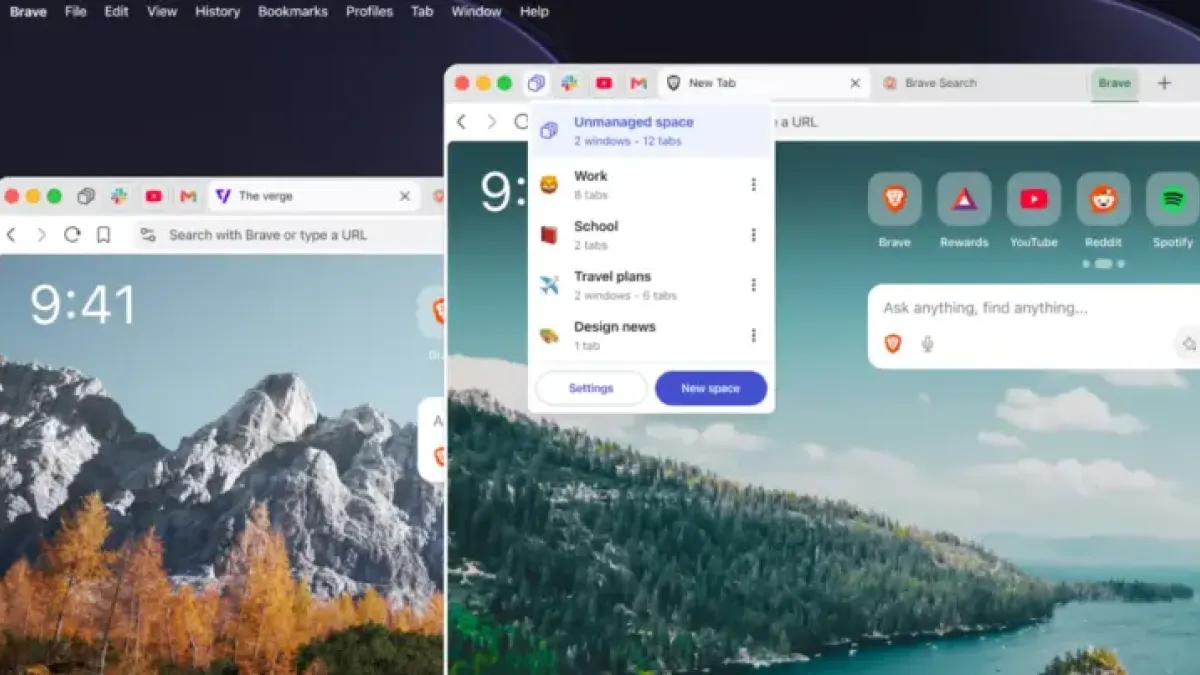
Phase two adds the core user-facing experience: users will create and switch between workspaces inside a single window, hiding current tabs and saving their exact state automatically on every switch.
Background tabs will load into memory only when a user clicks them, keeping system resource use low.
Brave contributor aguscruiz confirmed on GitHub that a single-window switcher interface — functionally similar to Vivaldi’s implementation — is the target design, and shared an early screenshot consistent with that approach.
Phase three will tie Workspaces into Brave’s existing sync system, Letting Users carry an active session between devices, such as moving a research session from a work laptop to a home PC.
Developers noted that introducing a new sync type carries significant technical complexity, and the team will hold phase three until the core workspace functions are stable.
Broader Push for Power Users
Workspaces arrives alongside a series of recent additions aimed at advanced users.
Earlier in June, a Compact Mode appeared in Nightly builds, reducing the browser’s interface frame to free up screen space.
Brave also pushed native Containers to its desktop beta, a feature that isolates browsing data by context and lets users run multiple accounts without cross-site data leakage between them.
Brave, developed by Brave Software Inc., is built on the Chromium open-source engine and markets itself primarily on privacy protections, including a built-in ad and tracker blocker.