Pokedle Tips & Tricks: Top Strategies to Solve Every Daily Puzzle

You’ve probably noticed Pokedle trending on your feed. Maybe you’ve even played a round or two. But here’s what I’ve found—most people guess randomly and hope for the best. They don’t have a real strategy.
That changes today.
I’ll show you exactly how to solve Pokedle puzzles faster and smarter. Not with luck. With a proven system that actually works.
What Makes Pokedle Different From Wordle
Before we get into the tactics, you need to understand one thing first: Pokedle isn’t just Wordle with Pokémon. It’s a completely different game.
Wordle tests your vocabulary. You’re guessing letters. Pokedle tests your knowledge of Pokémon traits. You’re guessing creatures based on data.
So here’s what that means for you. In Wordle, luck plays a role. But in Pokedle, knowledge does. You can train for this. You can get better.
The good news? You don’t need to memorize every Pokémon ever created. Instead, you just need to know how to think strategically.
Also read: Google Block Breaker: A Fun, Addictive Game
The Three Clue Types That Matter Most
When you make a guess in Pokedle, the game gives you colored feedback. Specifically, you get three types of clues that actually matter.
- Green = Exact match. The Pokémon you’re looking for has this exact trait.
- Yellow = Partial match. The Pokémon has this trait, but positioned differently in the chart. For example, if Type is yellow, the Pokémon has that type. Yet it’s maybe secondary instead of primary.
- Gray = No match. The Pokémon you’re looking for doesn’t have this trait at all.
Here’s the key insight: Not all clues are equally valuable.
See, some clues eliminate 60% of remaining Pokémon. Others only cut it by 5%. Knowing which is which changes everything.
The Clue Hierarchy—What Actually Matters
Listen. You have six guesses. Clearly, you can’t waste them on guessing randomly.

So you need to prioritize clues by how much information they give you. I call this the Clue Hierarchy.
| Clue Type | Information Value | Why It Matters |
|---|---|---|
| Type | 40-60% elimination | Over 800 Pokémon exist. Thus, Type cuts this down fast. Primary and secondary types matter. |
| Generation | 15-25% elimination | Each generation has 70-150 Pokémon. So knowing the era narrows your pool significantly. |
| Habitat | 10-20% elimination | Water Pokémon differ vastly from forest Pokémon. This group separation matters. |
| Color | 5-10% elimination | Less useful early. But better for fine-tuning later. |
| Evolution Stage | Variable | Helps in mid-game. Which stage in the chain? |
| Height/Weight | 3-5% elimination | Use these at the end. They’re your fine-tuning tools. |
Here’s what this means for your strategy. On your first guess, you want clues that eliminate the most Pokémon. That’s Type and Generation.
Later, on your last guesses, you’re using Height and Weight to pin down the exact answer.
Your Opening Guess Strategy
I need to be direct with you here. Your first guess matters more than most people think.
Why? Because a bad opening guess wastes one of your six chances. Meanwhile, a good opening guess gives you information that eliminates hundreds of Pokémon.
Here are the opening guesses that work best:
- Bulbasaur. It’s Grass and Poison type. Generation 1. Mid-sized. Plus, it tests two types at once. Most Pokémon don’t have this exact combination. So you’ll likely get useful yellow clues that point you in the right direction.
- Eevee. It’s Normal type. Generation 1. Small. And it covers a lot of ground. If you get a green on Type, you know you’re looking for another Normal type. But if you get gray, you eliminate a huge chunk.
- Pikachu. It’s Electric type. Generation 1. Small. Similar logic to Eevee. And you probably know its stats because it’s iconic.
- Skarmory. It’s Steel and Flying. Generation 2. Large. Plus, it tests an uncommon type combination. Fewer Pokémon are Steel type. So this clue is very valuable.
Why do these work? Because they test multiple categories at once. A single guess gives you information about Type, Generation, Size, and Color. That’s powerful.
How to Actually Win—The Three-Phase System
Okay. You’ve made your first guess. You got some clues. Now what?
Here’s the system I use. And it works.
Phase 1: Eliminate by Type (Guesses 1-2)
Your first guess tells you something about Type and Generation. Then use your second guess to confirm or explore a different type combination.
If your first guess gave you green on Type, stay with that type for guess two. You’re narrowing down which Pokémon of that type it is.
But if you got gray on both Type slots, you know the answer isn’t that type. So your second guess should test a completely different type pairing.
The goal here is simple: By the end of guess two, you should know the approximate Type and Generation of your answer.
Phase 2: Narrow by Habitat and Color (Guesses 3-4)
Now you know roughly what you’re looking for. You know the type. And you probably know the generation.
So your next two guesses should test different Pokémon within that type and generation combo. Pay attention to Habitat clues. They matter now because you’ve already narrowed your pool.
If you get a green on Habitat, you know the answer is from that region or that environment. This cuts your options by half.
Plus, Color clues are useful here too. If you know your answer is an Electric type from Generation 1, and you get a yellow on “Yellow,” you know it’s not the expected color. That eliminates some options.
By the end of guess four, you should be able to list maybe five to ten remaining possibilities.
Phase 3: Precision Guessing (Guesses 5-6)
Now you guess one of your remaining candidates. You have two chances left.
If you’re not confident, guess the one you’re least sure about first. If it’s wrong, the feedback will tell you exactly what to avoid. Then you can nail guess six.
But if you’re confident, guess your best guess on five; you’ll most probably win.
Also read: How to Get Free Dice Rolls in Monopoly Go
Common Mistakes That Cost You the Game
I see people make the same mistakes over and over. And they’re costing them wins.
Mistake 1: Ignoring color clues.
You get a yellow clue. You think, “Okay, the answer has this trait.” But then you ignore WHERE it appears.
Don’t do that. A yellow clue on Type tells you something specific. The Pokémon has that type. Yet maybe it’s secondary, not primary. That’s valuable information. Use it.
Mistake 2: Guessing the same type twice.
You test Fire types. You get gray on both type slots. Now you know your answer is not Fire type.
Then on guess two, you test another Fire type. Why? You already know it’s not Fire. You just wasted a guess.
Instead, test a different type. Get new information.
Mistake 3: Not using your five or six.
You have two guesses left. You’re down to three or four possibilities. Then you guess randomly.
Stop. Think. Which of these three is most likely? Guess that one on five. If you’re wrong, guess five gives you feedback. Use that feedback on guess six.
Mistake 4: Forgetting that color matters early.
Color is a low-value clue early in the game. But it’s still information. Pay attention to it. A Pokémon that’s blue differs from one that’s red. This helps you later.
Different Modes Need Different Tactics
Pokedle has multiple game modes. And each one requires a slightly different approach.
Classic Mode (Traits and Data)
This is what we’ve been talking about. Use the Clue Hierarchy. Test Type first. Generation second. Then narrow by Habitat and Color. This mode rewards strategic thinking.
Silhouette Mode (Shape and Outline)
You’re looking at a black outline. Then as you guess wrong, it gets clearer.
Your strategy here is different. Focus on distinctive features. Does it have wings? A tail? Horns? Is it quadruped or bipedal?
Your first guess should be a Pokémon with unique features. Charizard (has wings), Dragonite (has wings and multiple heads), or Alakazam (distinctive head shape).
But don’t guess common shapes like Pidgeot or Rattata. Those features appear in dozens of Pokémon.
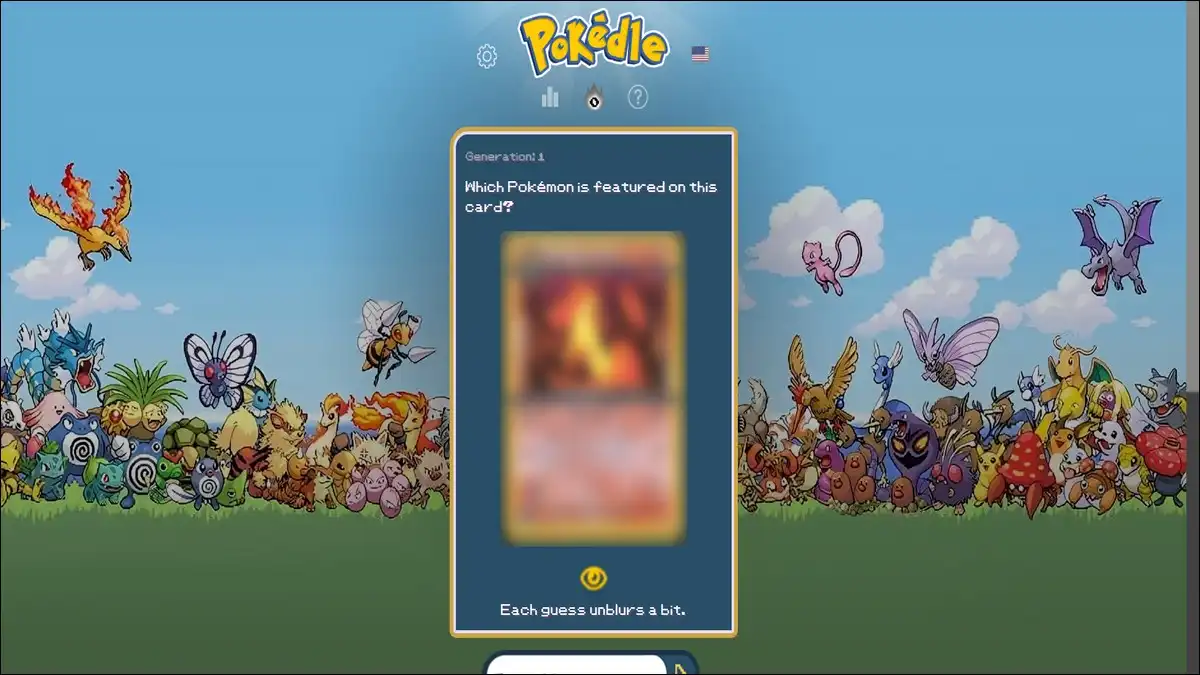
Card Art Mode (Trading Card Game Artwork)
You’re looking at a tiny, blurry crop of a Pokémon card. Honestly, this is hard.
Look for background clues first. Is it a forest? Ocean? Building? That tells you the habitat.
Then look for distinctive colors in the tiny fragment. Gold, silver, specific hues matter.
Think about card art eras. Old cards (1999-2005) look different from modern cards (2020+). The art style itself is a clue.
This mode rewards Pokémon card knowledge, not just Pokémon knowledge.
Flavor Text Mode (Pokédex Descriptions)
You’re reading the official description of a Pokémon. And you guess what it is.
Read for habitat clues. “Lives in forests” or “Found in caves” narrows things down.
Then read for behavior clues. “Hunts at night” or “Lives in packs” describes a specific set of Pokémon.
Next, read for physical traits mentioned. “Has electricity in its cheeks” or “Breathes fire” limits your options.
This mode rewards lore knowledge. You need to know the actual Pokédex entries.
The One Thing That Separates Good Players From Great Ones
Here’s what I’ve noticed after playing hundreds of rounds.
The best Pokedle players don’t memorize. Instead, they think.
They understand why certain guesses are better than others. They know that Type gives more information than Color. Plus, they understand that a yellow clue means something different depending on which position it’s in.
They have a system. And they follow it.
You now have that system. The Clue Hierarchy. The Three-Phase approach. The understanding of what each clue actually tells you.
So use it. Test it. Refine it.
After five or six games using this strategy, you’ll stop thinking about the system and just play. It becomes instinct.
That’s when you start winning consistently.
Also read: What is BitLife Unblocked And Where To Play This Game
Your Next Move
Play your next Pokedle with the Clue Hierarchy in mind. Start with one of the strong opening guesses—Bulbasaur or Eevee work great.
Watch your clues. Use the three-phase system.
Notice how much faster you narrow down the answer when you’re strategic instead of random.
That’s the difference between hoping and knowing.
FAQ
A: No. You need to understand how traits work. Type, Generation, Habitat. Learn those, and you can beat Pokedle even if you’re not a Pokémon expert. The system matters more than memorization.
A: Bulbasaur or Eevee. Both test multiple traits at once. But honestly? Pick one and stick with it. Consistency beats perfection. You’ll start to recognize patterns with your chosen starter.
A: Not directly. Silhouette is about visual shapes, not stats. Focus on distinctive features—wings, tails, head shapes. The strategy is different but the logic is the same: eliminate possibilities quickly.
A: Guess the one you’re least sure about on attempt five. The clues you get back will tell you which of the other two it is. Then you win on six.
A: Partially. Background and art style matter more there. But you still use hierarchy logic—look for big clues first (habitat, era), then fine-tune with color.
A: Two guesses if you’re lucky. Three guesses if you’re good. Most wins happen in four or five. Don’t chase speed. Chase consistency.
A: No. But this system works most of the time. The game has randomness. You can’t control the puzzle. You can only control your thinking.
A: If you’re learning, yes. See the pattern. Watch which clues matter most. Once you get it, you don’t need to write it down anymore.
A: Sure. But that misses the point. You’re not trying to win. You’re trying to get better at thinking strategically. Do that, and winning comes naturally.

![Wordle Solver: Try Hard Guides Tool + Data Strategies [2026]](https://www.techdemis.com/wp-content/uploads/2026/06/Try-Hard-Guides-Wordle-Solver-800x450.webp)