
NS Mainframe Explained: Architecture, Security, and Scalability

You hear the term “mainframe“ often in big business. It might sound like old technology. But the truth is, mainframes, like the ones often referred to as NS Mainframe (which draws heavily from the core principles of IBM Z), form the invisible backbone of modern global commerce.
If you use a credit card, book a plane ticket, or check your bank balance, you are very likely interacting with a mainframe. We want to show you exactly why these machines still matter.
In this guide, we explain this complex technology in simple, clear steps. We’ll look at the design that makes them fast, and examine the security that protects your data. Also,, we’ll cover the huge capacity that lets them handle massive workloads without failure.
The Foundational Architecture: Built for Massive Transactions
The very first thing you need to know about NS Mainframe is that its design philosophy differs totally from a standard server. A regular office server focuses on speed for one task. In contrast, a mainframe focuses on throughput.
Throughput is the total rate at which it can process many transactions at the same time. This ability is crucial for banks, for example, which process millions of operations every hour.
The entire design supports constant, non-stop work.
Inside the “Big Iron”
A modern mainframe like NS is often called “Big Iron.” It looks like a very tall, complex cabinet. But inside, you find a highly specialized machine. You won’t find just one motherboard like in a PC. Instead, the system is organized into many independent units.
We call these Central Processor Complexes (CPCs). Metal frames often hold them. Moreover, every single part, from the power to the cooling, must run constantly, 24 hours a day, 7 days a week.
The processors in a mainframe do not focus on having the fastest single speed. Rather, engineers designed them for extremely high transaction volumes.
Some even have special System Assistance Processors (SAPs). These SAPs only move data as fast as possible. This frees up the main processors; thus, they focus only on calculations.
Mainframes also use a huge Input/Output (I/O) Subsystem. This part manages all communication between the processors and other devices, like storage and networks. We measure its power by the number of channels.
Also read: M4 Mac Mini: What We Know So Far
Channels are independent, high-speed paths that transfer data simultaneously. This large I/O capacity allows the mainframe to handle thousands of network and storage requests without slowing down its primary work.
The system utilizes something called Logical Partitions (LPARs). This is a very strong form of hardware-level virtualization. Imagine taking the mainframe hardware and dividing it into many isolated virtual machines. Each one can run its own operating system, like z/OS or Linux.
And, this isolation is built into the hardware, making it extremely secure and stable. You can run your critical banking app in one LPAR. Meanwhile, you can run a testing server in another. Importantly, they will not affect each other at all.
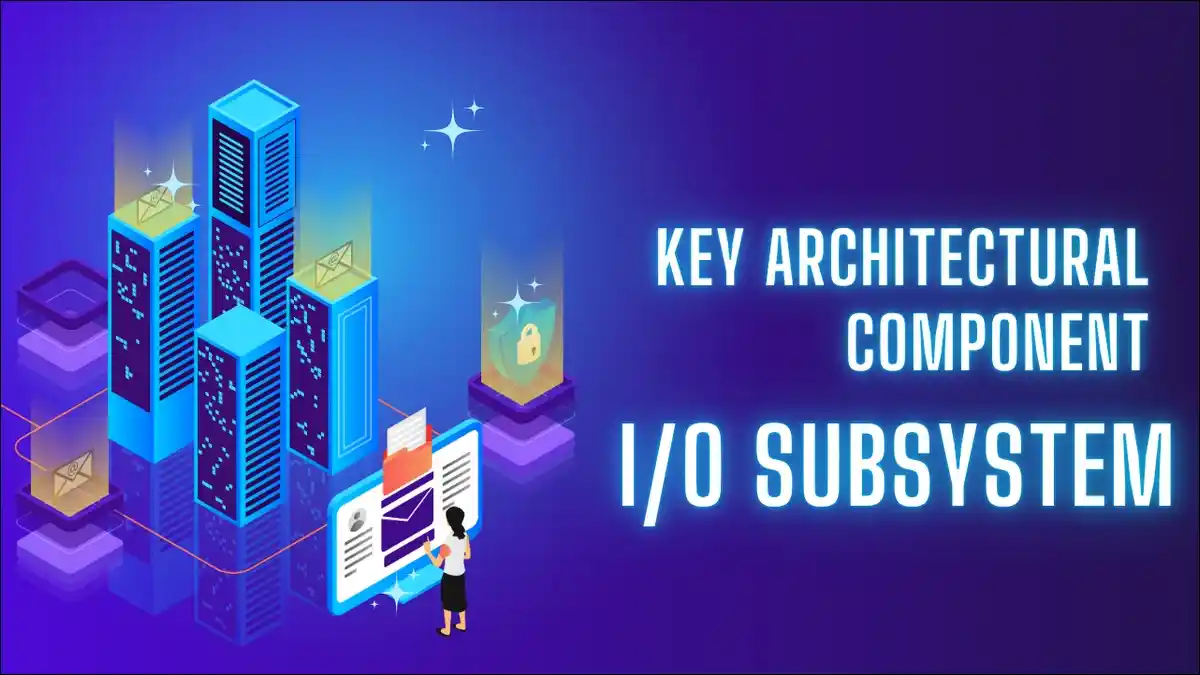
Key Architectural Component: I/O Subsystem
The I/O Subsystem is one of the biggest differences in NS Mainframe design. In a regular server, heavy data transfer can bottleneck the main CPU. However, the mainframe uses special hardware and processors to handle I/O completely on its own.
Powerful parts called channel controllers and I/O adapters manage this I/O work. There can be hundreds of these. They manage data transfer for millions of disk transactions or network requests. As a result, the main CPUs almost never have to wait for data.
This focus on fast, efficient data movement is why the mainframe achieves amazing throughput. It can process an ATM withdrawal instantly while also running complex batch reports.
Ultimately, this I/O power makes mainframes the best for transaction processing.
| Component | Simple Function | Architectural Strength |
| Central Processor Complex (CPC) | The frame holding processors and memory. | It has built-in self-checking for errors and performs automatic recovery. |
| Logical Partitions (LPARs) | Dividing the mainframe into separate, isolated virtual servers. | It guarantees security and dedicated resources for different jobs. |
| I/O Subsystem (Channels) | Dedicated hardware for moving data to storage and networks. | It keeps the main CPU clear of delays, thus ensuring fast transaction speed. |
NS Mainframe Offers Unmatched Security: Layered Protection
Security is essential today. Mainframes like NS Mainframe handle the world’s most critical data. This includes all major financial transactions and government data.
Therefore, their security is built on many strong layers. The goal is not just to keep people out, but also to protect data even from those who are authorized to be inside the system.
You can trust these systems because the hardware itself deeply wires in their security. It doesn’t just rely on extra software.
Also read: What is RCS Messaging (RCS Chat) and How to Use It?
Hardware-Accelerated Encryption
Modern mainframes include special hardware for encryption. A key feature is the Central Processor Assist for Cryptographic Function (CPACF). This part is built into every processor core. It encrypts data using standard algorithms like AES and DES right on the hardware.
Additionally, we use optional, secure modules called Crypto Express adapters. Professionals use these for managing encryption keys and public key cryptography securely.
Why does hardware-based encryption matter so much? Simply put, it is extremely fast and very secure. It takes the encryption work away from the main CPUs. This means bulk encryption does not slow down the system’s speed.
Crucially, the hardware can create, store, and use the encryption keys only within the secure, protected enclosure. This meets strict standards like FIPS 140-2. Ultimately, this pervasive encryption means the system protects your data when it is stored (data at rest).
And when it is moving (data in transit), and even when it is being used (data in use).
NS Mainframe Brings Identity and Access Control (RACF)
The core of mainframe security is the Security Server. Its most famous component is the Resource Access Control Facility (RACF). RACF is a powerful software that controls every single action on the system. It acts as the ultimate security guard.
RACF works by protecting all important system resources in the z/OS environment. Every user must first prove their identity with a user ID and password. More significantly, RACF strictly limits what an authorized user can do and what data they can see.
For instance, RACF might allow a payroll staff member to read salary data. However, it will completely block them from changing core system files. RACF uses detailed profiles to define who users are, what resources they can touch, and what level of access they have.
This detailed control minimizes the risk of mistakes or security breaches. Even if a user gains access, the RACF rules strictly limit their ability to cause damage.
The system also supports multi-factor authentication (MFA) for an extra layer of protection.

Next-Generation Security and Resilience
Modern NS mainframes are designed to fight new threats, like fraud and complex cyberattacks. Therefore, they now include AI-driven security features. The newest processors can run AI models right where the transactions are happening.
This allows for real-time fraud detection. As a result, the system can instantly spot and flag suspicious transaction patterns before the fraud completes.
Security also involves the ability to bounce back, or resilience. The systems use a Secure Boot process. This ensures that only trusted, verified code runs when the system powers on.
Moreover, they use Trusted Execution Environments (TEEs). For example, IBM Secure Execution for Linux isolates workloads in a special, secure hardware environment. We call this confidential computing. It means that even the system’s own administrator cannot access the data while the processor is working on it.
For the most important data, this level of security and hardware integrity is unmatched anywhere. Therefore, the mainframe is like a fortress with many independent security layers.
NS Mainframe Offeres Infinite Scalability and High Availability
When a big retailer runs a huge sale, or a tax deadline arrives, the workload on their core systems can jump tenfold very quickly. Most server systems struggle with this.
They need expensive, pre-planned extra hardware. In complete contrast, high availability and scalability are the natural state of the mainframe.
We trust these systems because they are built to grow and fix themselves without ever having to stop.
Scalability: Capacity On Demand
Mainframe scalability means the system can add capacity without stopping business work. We achieve this mainly through vertical scalability. Instead of adding more physical machines (which is horizontal scaling), you add resources inside the single physical mainframe box.
The mainframe already has many processor cores installed. However, it holds some back in a “capacity on demand” state. When your workload suddenly increases, you can activate these reserve cores instantly, often within minutes, to handle the spike.
This process is seamless and causes no disruption. You avoid the high cost and work of buying and setting up new physical servers. Furthermore, mainframes are excellent at combining many jobs onto one machine.
Many companies have saved money by moving hundreds of smaller, less efficient servers onto one powerful mainframe. This reduces management, power, and cooling costs significantly.
The concept of a Sysplex (System Complex) is another key to scaling. A Sysplex links several mainframes together. They act as one large computing unit. They can share data and workloads dynamically.
This allows for truly massive scaling to handle unpredictable growth across the entire organization.
NS Mainframe Offers High Availability: Redundancy in Everything
Mainframes are famous for their RAS features: Reliability, Availability, and Serviceability. For an airline or a financial market, even a few seconds of downtime can cost a fortune. The goal of the mainframe is zero unplanned downtime.
The system meets this goal through total redundancy. Almost every critical part has a backup. For instance, you will find extra power supplies, multiple cooling systems, and spare processor units. If a component fails—like a memory card—the system automatically switches to the spare.
It does this without stopping the applications that are running. This happens automatically because the hardware has self-checking features. The hardware detects the failure, switches over, and marks the broken part for replacement.
All of this happens while the system is still running. This capability means you can often perform maintenance and parts replacement while the system is online. We call this concurrent maintenance.
Availability also includes the software. The operating systems, like z/OS, have many layers of error recovery. They automatically handle software problems.
When you combine this with the redundant hardware, you get a system that often runs for years without any unplanned downtime. This is why businesses worldwide trust it as the foundation for critical applications.
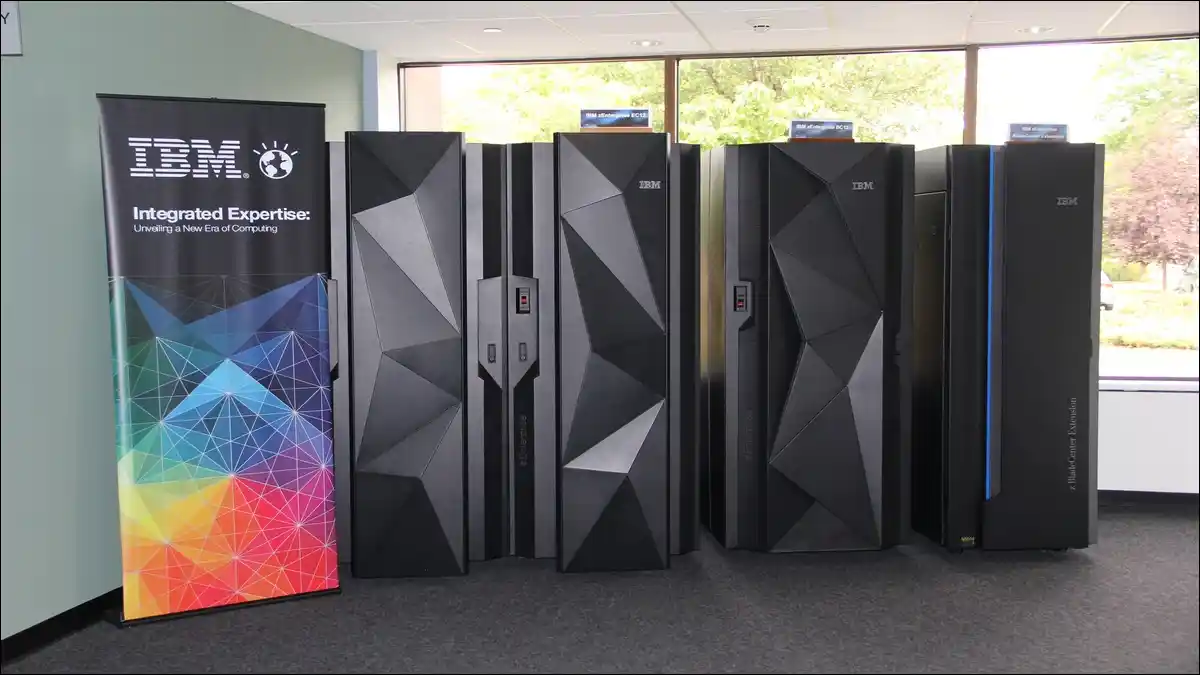
A Deeper Look at System Z Scalability (Source Reference)
To grasp the importance of this, we can look at the design principles of IBM Z (which guides the NS Mainframe design).
According to IBM documentation, the design focuses on the system’s ability to “continue to function well as it is changed in size or volume; for example, the ability to retain performance levels when adding processors, memory, and storage.” (IBM z/OS Basic Skills).
This simply means that as your company adds customers, the mainframe can grow without missing a beat. It can do this by turning on reserve cores (vertical scaling) or connecting to another mainframe (horizontal scaling), all without the business ever experiencing a pause.
Ultimately, this continuous, predictable performance during growth is its biggest advantage.
Credible Sources Used:
- IBM z/OS Basic Skills documentation for architecture and RAS principles – here.
- IBM Z Security documentation for encryption and threat detection details – here..
The NS Mainframe stands as a testament to robust, high-integrity computing. Its architecture prioritizes transaction rate, its security is woven into the silicon, and its design ensures continuous operation under any load.
It remains the quiet engine powering the most demanding segments of global finance and logistics.


