
RojadirectaTV: What It Is, Risks and Safer Alternatives [2026]
![RojadirectaTV: What It Is, Risks and Safer Alternatives [2026]](https://www.techdemis.com/wp-content/uploads/2026/04/RojadirectaTV-Explained.webp)
Do you know that millions of sports fans search for RojadirectaTV every month? If you’re curious about what it is, whether it’s safe to use, or what your options are—this guide has all the answers.
Let me be straight with you: RojadirectaTV is a streaming link aggregator that’s been tangled up in legal battles for 20 years. Using it comes with real risks. But if you’re looking for affordable ways to watch your favorite matches, there are better options than you think.
Let’s break this down.
What Is RojadirectaTV, Really?
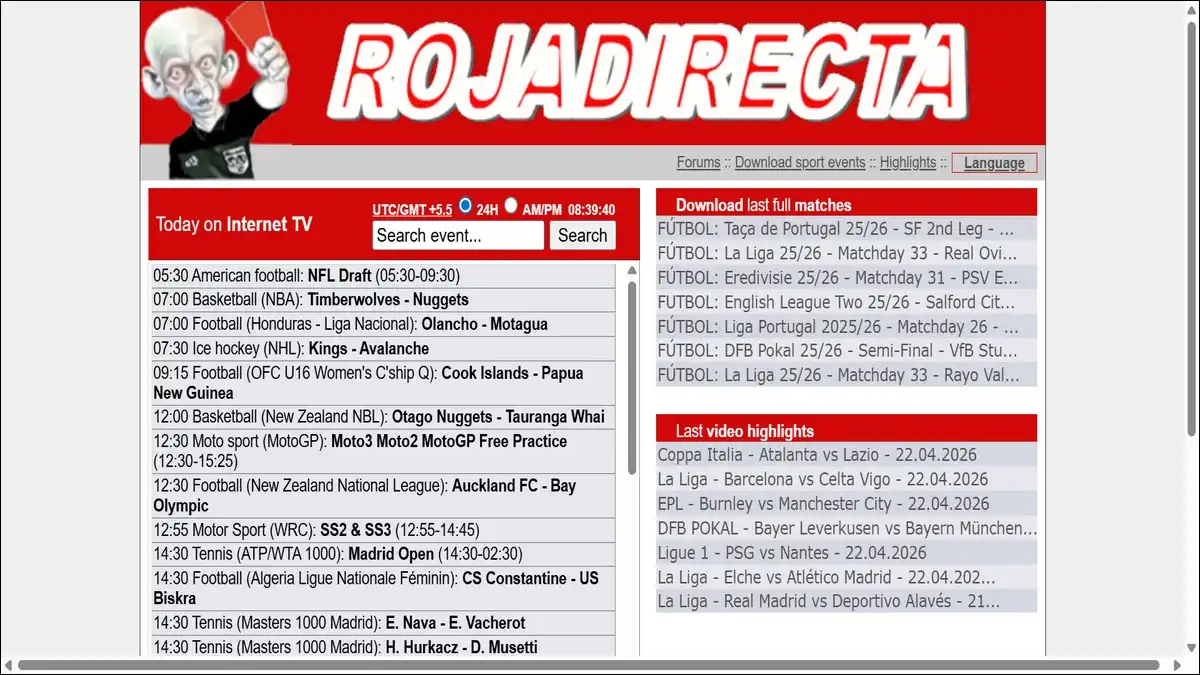
RojadirectaTV isn’t Netflix or ESPN+. It’s basically a directory—a website that collects and points to sports streams hosted on other sites.
Here’s how it works: You go to the site. You search for a match, find a list of links, and click one of them. That link takes you to another site where the actual stream lives.
And this matters a lot legally. RojadirectaTV doesn’t host videos, it just points to them.
This site has been online for along time, it was launched in 2005. A Spanish guy named Igor Seoane spotted an opportunity. Spanish football fans wanted to watch matches their local TV wasn’t showing. So he built a simple solution: put all the links in one place.
For years, this felt like a gray area. But that changed.
Why Millions of People Still Use It
Let me tell you why so many fans stick with RojadirectaTV, even after 20 years of legal trouble.
- First: it’s free. You don’t need subscription, sign-ups, or free trials that turn into monthly charges.
- Second: it’s global. You can watch matches from anywhere. That’s huge because sports are often blocked by location. Maybe you live somewhere your favorite team isn’t broadcast locally. RojadirectaTV gets around that.
- Third: it covers everything. Football. Basketball. Tennis. Boxing. Cricket. F1. Sports your local channels don’t even air.
The numbers back this up. Traffic data shows from Semrush, and other tools, the main Rojadirecta sites still get thousands of visitors every month. In March 2026, one domain had 10,790 visits.
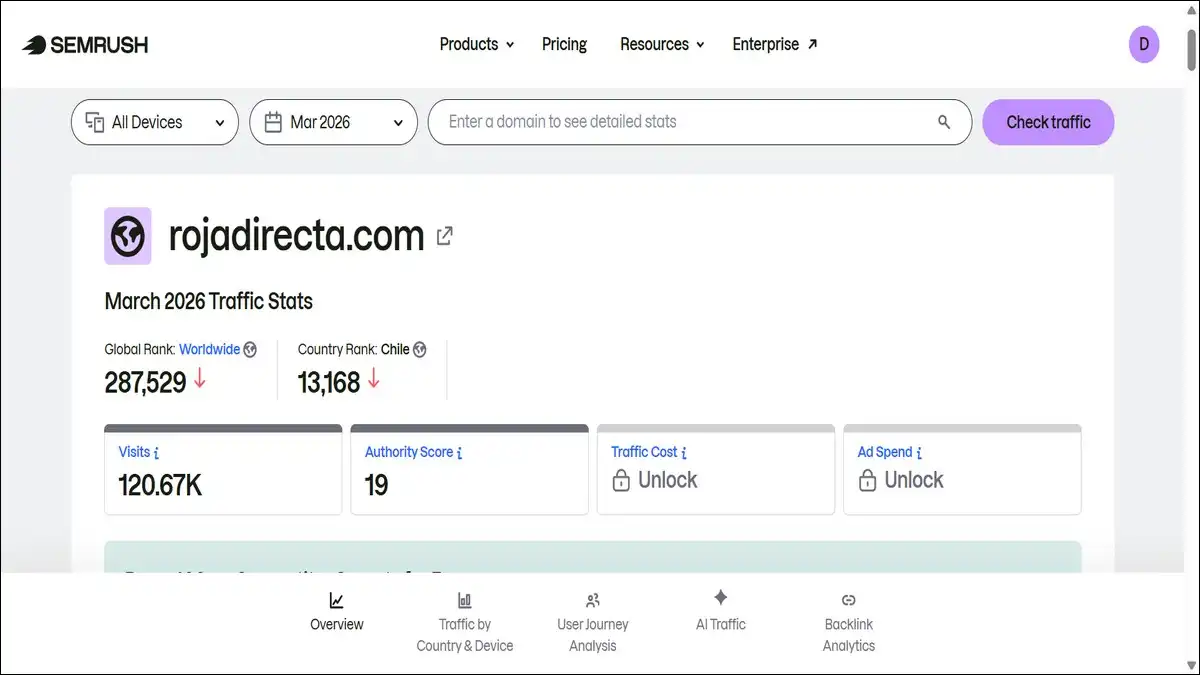
Average time spent? 8 minutes and 43 seconds. That’s not casual browsing—people are actively hunting for streams.
Who uses it? Mostly men (83-87%), mostly ages 25-54. Italy, Germany, Mexico, Spain, and Greece drive the most traffic.
The demand is real. People want sports their local services don’t offer. Or can’t afford.
But here’s the thing: that demand doesn’t make it safe or legal.
How Courts Changed Their Minds on This
Here’s the part most articles skip over. Courts didn’t always rule against Rojadirecta.
Back in 2009 and 2010, Spanish courts actually said it was fine. Judges said the platform just provided links. It didn’t host the videos. That distinction seemed to matter. The site looked legal.
Then 2016 hit. Everything flipped.
Madrid courts told Rojadirecta to stop linking to illegal football streams. Then in 2018, appeals got rejected. Suddenly the legal game changed. Courts stopped accepting the “we just provide links” defense.
Why? Judges realized something called “contributory infringement.” Basically, even if you don’t host content, you’re still helping people break copyright law when you collect links to illegal streams. The difference between hosting and linking didn’t matter anymore.
This shift is important. It wasn’t random. Courts figured out that link aggregation enables illegal broadcasting, even if the aggregator doesn’t actually keep the videos.
And then came the consequences.
In 2023, Spain’s top court made it official. They ruled that Igor Seoane—the guy who runs it—could be held personally responsible. Not the company. Him. Personally.
Same year, a court ordered him to pay €31.6 million (about $33 million USD). That’s a judgment, not a fine. He’s personally on the hook for roughly €15.8 million.
Also read: Ryder Cup 2027 Tickets, Schedule and Venue Details

And that’s not all. According to reports from TorrentFreak, Seoane also faces criminal charges that could land him in jail.
This isn’t hypothetical. This is what’s actually happening.
The Malware Problem Nobody Talks About
If legal trouble wasn’t enough, there’s another issue: malware.
When I say “security risk,” I don’t mean vague warnings. I mean actual malware that real security researchers have found on Rojadirecta mirror sites.
Gridinsoft analyzed the rojadirecta.me domain. They gave it a 33/100 trust score. That’s really low. Their tools flagged suspicious code, hidden ownership, and sketchy infrastructure.
Falcon Sandbox checked another variant and found 14 malicious behaviors—14 different red flags—connected to 10 attack methods and 6 known hacking tactics.
These aren’t false alarms. They’re real threat detections from professional security companies.
Here’s what happens in practice: You click a “Free HD” button. Instead of a stream, you get:
- Pop-ups that download malware
- Fake pages that steal your login info
- Code that tracks your browser activity
- Notifications that spam you with ads
- Tricks that hijack your browser extensions
- Links that send you to totally different malicious sites
And the worst part? Most “Rojadirecta mirror” sites are literally scams built to spread malware. When you search for a working Rojadirecta link, you’re often landing on a fake copy designed to infect your device.
Security experts (from Fire Stick Tricks and other sources) say many of these domains have been flagged by Norton Safe Web, ScamAdviser, and VirusTotal. Some get flagged by multiple security tools at once.
You’re not just risking a lawsuit. You’re risking your device.
What Actually Happens If You Get Caught
This is where people get vague. Let me be specific.
First, understand that penalties vary by country. Not everyone enforces equally. But enforcement is going up.
In Spain (where Rojadirecta started), users face criminal charges—not just lawsuits. That means possible jail time and criminal records, not just fines.
- Denmark? Courts have handed out massive penalties to content owners.
- France? Authorities actively block access at the ISP level.
- Colombia? The service is banned completely.
- The pattern is clear: major countries take this seriously.
For users, consequences can include:
- Criminal charges with fines from €1,000 to €100,000+ depending on your country and if you’re a repeat offender.
- ISP monitoring and throttling. Your internet company can see what you’re watching. They can slow your connection. Eventually, they can cut you off.
- Device seizure by cops in some places.
- ISP blacklisting that makes it a nightmare to get your service back.
For operators like Seoane? The stakes are way higher: $33 million in damages, personal liability, and active criminal charges.
This isn’t “might happen.” This is happening now.

Streaming Services That Won’t Break the Bank
Here’s what most people don’t know: legal sports streaming is actually cheaper than the “free” option when you do the math.
Let me show you what’s out there by region. I’m using real 2026 prices because this stuff changes every few months.
| Region | Best Deal | Cost/Month | What You Get |
|---|---|---|---|
| Spain | La Liga+ | €4.99 | Every La Liga match (live + replays), Segunda highlights |
| Italy | DAZN | €9.99 | Serie A, Coppa Italia, Bundesliga, Ligue 1, European cups |
| Germany | Bundesliga+ | €4.99 | All Bundesliga matches (live + replays), 2. Bundesliga |
| Mexico | Liga MX App | $4.99 USD | Every Liga MX match (live + replays), Copa MX |
| USA | ESPN+ | $10.99 | MLS, world soccer, UFC, college sports |
| UK | Sky Sports | £25 | Premier League (some), EFL, international |
| India | Disney+ Hotstar | ₹299 (~€3.50) | Premier League, Champions League, ISL, cricket, more |
| Brazil | Premiere | R$79.90 (~€16) | Campeonato Brasileiro, Copa Libertadores |
| Australia | Paramount+ | AUD$16.99 (~€10) | A-League, world soccer, general content |
This isn’t just a list. These are services you can actually use right now.
The Best Deals by Region
- Spain: La Liga+ costs less than a coffee. €4.99/month gives you every La Liga match with on-demand replays. Want more? Add another €5-10 for other competitions. Total? €10-15 for full football coverage. That’s better value than hunting for Rojadirecta links.
- Germany: Bundesliga+ has the same advantage. €4.99/month. Full Bundesliga coverage. No link hunting. No malware. Just football. For the DFB-Pokal, public TV channels (ARD/ZDF) broadcast games for free.
- Italy: DAZN at €9.99/month covers Serie A (which is really what Italian fans want), plus Coppa Italia, European cups, and other sports. One subscription, problem solved.
- India: This is wild. Disney+ Hotstar gives you Premier League, Champions League, and Indian Super League for €3.50 a month. That’s one of the best streaming deals on the planet. If you have family there or travel, it’s unbeatable.
- USA: ESPN+ at $10.99/month covers MLS completely plus international soccer. Premier League fans? Peacock has exclusive US rights for $5.99-15.99 depending on the plan. Both are straightforward. No complications.
- Mexico: The Liga MX Official App streams every match for $4.99 USD. It’s run by the league itself—no middleman, solid quality, complete coverage.
Also read: SportSurge: Top 10 Free Alternatives
The Real Cost Breakdown
What Rojadirecta really costs you:
- Subscription: €0 (looks free)
- Time hunting links: 15-30 minutes per match
- Malware risk (device replacement): €500-2000
- ISP throttling: Losing internet speed
- Legal fines: €1000-100,000+
- Criminal charges: Criminal record in some places
- Stress: Priceless
What legal streaming costs:
- Subscription: €5-15
- Time to watch: 2 minutes setup
- Malware risk: Zero
- Legal risk: Zero
- Device protection: Total
- Peace of mind: Priceless
It’s not even close. Legal wins on cost, time, security, and sanity.
Why Geo-Blocking Exists (And Why It Matters)
You’re probably mad about geo-blocking. “Why can’t I just watch my team?” It’s a fair question.
Here’s how it works: Sports leagues don’t sell “worldwide rights.” Instead, they sell “UK rights,” “German rights,” “Australian rights” separately. Each region has different broadcasters and different prices.
What people don’t realize: these rights fees are huge. A broadcaster might pay hundreds of millions for Premier League rights in one region. That investment only works if they’re the only one showing it. Otherwise, free streaming kills their business.
That’s why you can’t access the same service everywhere. It’s contractual; the league has to protect their broadcaster’s investment.
Is it annoying? Totally. But it’s not the streaming platform’s fault. It’s the money system. And honestly, without those rights payments, leagues couldn’t afford to broadcast at all.
This explains why Rojadirecta exists. Geo-blocking creates real demand for workarounds. That demand is legit, even if Rojadirecta’s solution isn’t legal.
But here’s the good news: every major league now has a legal option. These didn’t exist 10 years ago. They exist now because people demanded them.
Italian Serie A fans? DAZN at €9.99/month covers every match. German Bundesliga fans? Bundesliga+ at €4.99/month, complete coverage. Mexican Liga MX fans? Official Liga MX app for $4.99 USD. Canadian Premier League fans? DAZN has exclusive rights for CAD $11.99/month. Australian A-League fans? Paramount+ streams it for AUD $16.99/month.
Every major league has a legal option. Sometimes it’s regional. Sometimes pricier than you’d like. But it exists.
The frustration makes sense. So does the solution. And it’s affordable. The gap between “I want free” and “free is risky” is way smaller than it was.
Why Rojadirecta Won’t Die
You might ask: if courts ruled against it, if the operator faces $33 million and jail time, if malware researchers flagged it—why’s it still around?
Simple: it’s cheap to keep going.
New domain? €12 a year. When authorities block one domain, a mirror pops up on another. While regulators find domain number two, three more appear.
Money-wise, it barely works. Operating costs: €2,000-10,000 monthly. Ad revenue: €3,000-20,000 monthly. Not profitable in the normal sense, but sustainable for stubborn operators.
The operation is spread out too. The main site gets sued. Mirror sites work independently. Block the original Rojadirecta domain, and copies keep running. Users just bookmark the one that works.
Igor Seoane himself? After 20 years, this isn’t just business. It’s principle. He’s fighting what he sees as unfair copyright rules. That explains why a $33 million judgment didn’t shut him down.
And here’s the thing: traffic is actually growing. According to Semrush data, one Rojadirecta variant grew 6.37% month-over-month in early 2026, despite all the blocking.
So enforcement doesn’t kill the platform. It shifts consequences to operators and users. The consequences are real and documented. But demand keeps going because geo-blocking keeps going.
- For users: Rojadirecta won’t disappear, but using it means accepting real, documented risks.
- For leagues: Geo-blocking creates demand that blocking alone won’t fix.
Myths vs. Reality
Let me kill some common myths.
Myth: “A VPN makes it safe and legal.”
Reality: VPN hides your location. That’s it. It doesn’t make illegal viewing legal, or protect you from malware on clone sites. Also, it doesn’t reduce prosecution risk in countries that actively pursue users. The “VPN safety” pitch is marketing.
Myth: “Nobody actually gets in trouble.”
Reality: Igor Seoane is facing criminal charges in 2026. Users in Spain, Denmark, and France have been targeted. ISPs cooperate more than ever. Enforcement is going up, not down.
Myth: “The links are from legal sources, so it’s semi-legal.”
Reality: The links point to illegal streams. Courts ruled that collecting illegal stream links facilitates copyright theft, even if you don’t host them. The legal shield is gone.
Myth: “Legal streaming is too expensive.”
Reality: Smart picking by region costs €5-15 monthly for most sports. That’s one dinner out. Rojadirecta costs include malware risk, prosecution risk, device seizure, and ISP monitoring. The math favors legal.
Common Questions Answered [FAQ]
Varies by place, but increasingly no. Spain’s courts ruled against it, period. Other countries follow. In major Western countries, assume it’s illegal and risky.
No. Mirrors get flagged for malware by professional tools. Gridinsoft rated common ones 33/100. Falcon Sandbox found 14 malicious behaviors on others.
Criminal charges are possible, not just lawsuits. ISP throttling. Device seizure happens. Operator prosecutions (like Seoane’s) prove enforcement is real.
Here are some legal options along with thier price: Spain: La Liga+ (€4.99). Italy: DAZN (€9.99). Germany: Bundesliga+ (€4.99). USA: ESPN+ ($10.99). India: Disney+ Hotstar (€3.50). Find yours and check current availability.
Users get prosecuted less than operators. But it happens. ISPs monitor and report. Risk is real, even if less common than operator prosecution.
Yes, constantly. Mirror domains keep popping up. Blocking one takes weeks. A new one launches. The cycle continues because mirrors operate independently and cost almost nothing to launch. Expect it to stick around.
Wrapping Up!!
RojadirectaTV is a 20-year-old link collector that let millions watch sports globally. It filled a real gap: access to sports people couldn’t watch locally.
But now it’s attached to a $33 million judgment against its operator. Criminal charges are active. Malware researchers found threats on multiple versions. Courts have ruled universally against it.
The real takeaway: legal sports streaming is cheaper than you think. India’s Disney+ Hotstar at €3.50/month. Spain’s La Liga+ at €4.99/month. Options exist for every major region.
Your choice isn’t between “free pirate” and “expensive legal.” It’s between accepting real risks (legal, security, money) for free access, versus spending €5-15/month for safe, reliable, legal viewing.
The numbers favor legal. The law favors legal. Security favors legal.
If your region feels pricey, check other services. Traveling? Use a VPN to access your home region’s legal options. Budget-conscious? Global options are surprisingly cheap.
But using Rojadirecta in 2026 is a choice to accept documented legal, security, and money risks. Make that choice with your eyes open. That’s all.


